
October 22, 2026
Premier Bin rental Service in Toronto and the GTA
Last updated:
Quick Answer: What are the physical rules for placing a rental bin off your driveway?
Any waste container positioned on public asphalt must leave a minimum of 3.05 metres of roadway width clear for emergency vehicles. It must be equipped with flasher barricades at night, remain 3 metres away from fire hydrants, and be tarped properly to prevent flying debris.
If you are planning a renovation and realize your private driveway is too small, placing the container on the roadway is your next best option. However, dropping a massive steel box into active traffic lanes introduces serious pedestrian hazards.
You must comply with strict physical safety rules dictated by transportation departments. Here is what you need to know about the physical logistics and hazard prevention.
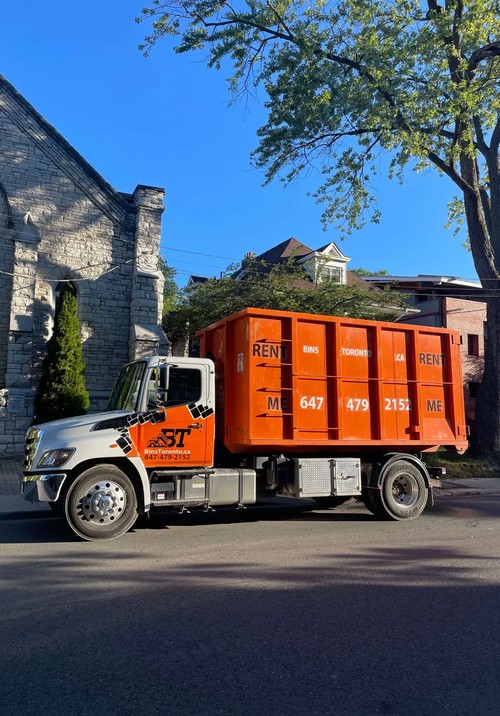
You cannot simply drop a massive obstacle on a narrow lane and block the flow of vehicles. Local bylaws require that a minimum of 3.05 metres of width must be kept clear and passable at all times. This is the minimum width required for a fire engine or ambulance to safely bypass the obstruction in an emergency.
Furthermore, the structure must maintain a strict 3-metre (10 feet) radius from all fire hydrants and cannot be placed too close to an intersection, where it would create a blind spot for turning motorists.
A dark steel unit sitting in a residential zone can become virtually invisible to drivers at night or during a heavy downpour. To comply with safety guidelines, the unit cannot be left unmarked.
Flasher barricades (or highly visible traffic pylons) must be provided at each end from one-half hour before sunset to one-half hour after sunrise. The corners facing active traffic should also be equipped with reflective safety tape to ensure it does not create a collision hazard.
Overloading on your private property is a bad idea, but overloading near pedestrian walkways is a major liability. If debris is piled higher than the rim, it becomes extremely unsafe for the driver to transport and poses a severe risk to bystanders.
Waste must be properly tarped during transport to prevent flying debris. If it is overflowing with drywall or wood, the tarp cannot be secured. Reputable disposal companies will refuse to pick it up until you remove the excess waste.
You are responsible for the pavement beneath the unit. On hot summer days, asphalt becomes soft. If a heavily loaded unit rests directly on the pavement, its steel rollers will gouge deep divots into the surface.
To avoid fines for property damage, always ensure your disposal company places heavy-duty wooden planks (plywood) under the steel wheels. This distributes the weight and protects the asphalt.