
October 22, 2026
Premier Bin rental Service in Toronto and the GTA
Last updated:
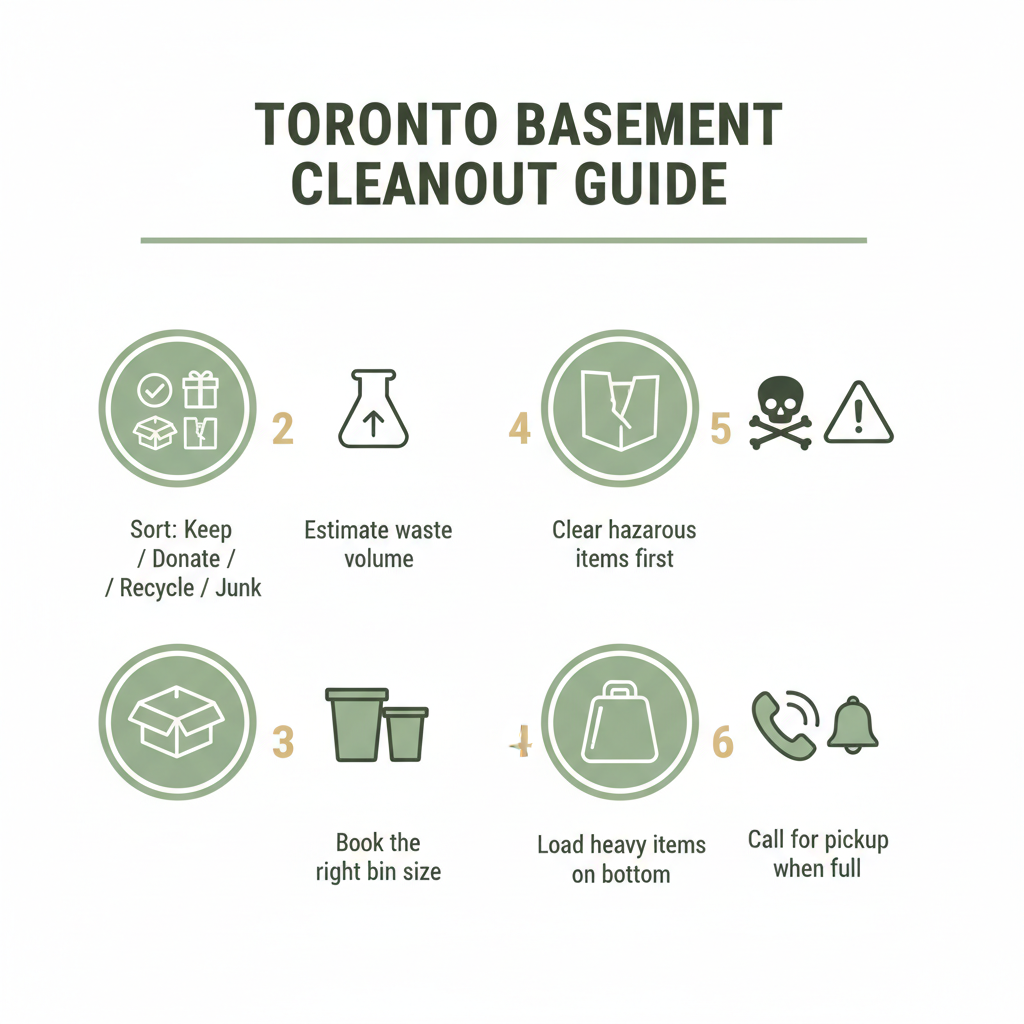
A successful basement junk removal project requires carefully planning your total waste volume before you begin lifting boxes. You should sort your items into four strict zones to maintain momentum and prevent overwhelming piles. For most residential basement jobs, an 8 yard or 14 yard roll off container provides the perfect amount of space. You can save time and money by loading heavy items flat on the bottom and strictly keeping hazardous waste like liquid paint out of the container.
In this guide:
Most cleanout disasters happen because homeowners start without a concrete plan. You pull out the first dusty box, realize you have no idea what to keep, and quickly lose motivation. Your debris piles up on the floor with absolutely nowhere to go.
Securing a reliable dumpster or garbage bin rental in Toronto is the smartest first step. It sits safely on your driveway so you can load it on your own schedule. Before you throw away a single item, you must complete these crucial preparation steps.

The four zone sorting method is the ultimate secret to moving quickly through a massive residential project. You need to set up four distinct physical areas before you begin. You work through one small section of the room at a time to avoid feeling overwhelmed.
KEEP
Stays in the home. Move these items directly to their new permanent location immediately.
DONATE
Still highly usable. Box these items up and schedule a pickup with a local charity right away.
RECYCLE
Clean cardboard and basic metals. Check your municipal guidelines for what goes to the curb.
JUNK
Straight into the container. You must not second guess yourself once an item lands here.
If an item goes into the junk pile, it must stay there permanently. Taking things back out is the biggest mistake you can make during a purge. You should only rescue items that you will absolutely use within the next six months.
Container dimensions depend entirely on how packed your space is and what exactly you are throwing away. Choosing the correct capacity upfront prevents frustrating delays and unexpected overage bills. Here is a practical guide to help you pick the right volume for your residential waste disposal container.
| Project Scenario | Recommended Container Size |
|---|---|
| Light basement decluttering, mostly cardboard boxes and soft goods | 6 yard or 8 yard |
| Moderate cleanout with broken furniture and general household junk | 8 yard or 14 yard |
| Full basement gut including old drywall, flooring, and ceiling tiles | 14 yard or 20 yard |
| Hoarder level cleanout or completely full unfinished storage space | 20 yard or 30 yard |
When you are stuck between two sizes, you should always go one size larger. The cost difference between an 8 yard and a 14 yard container is significantly less than the cost of ordering a second delivery. If you are combining your purge with a construction project, we suggest exploring our larger disposal options to handle the heavy drywall and framing wood safely.
You must give certain household items special treatment to comply with local environmental laws. Throwing the wrong materials into your container will trigger expensive contamination fines. Here is exactly what you need to know about restricted basement junk.
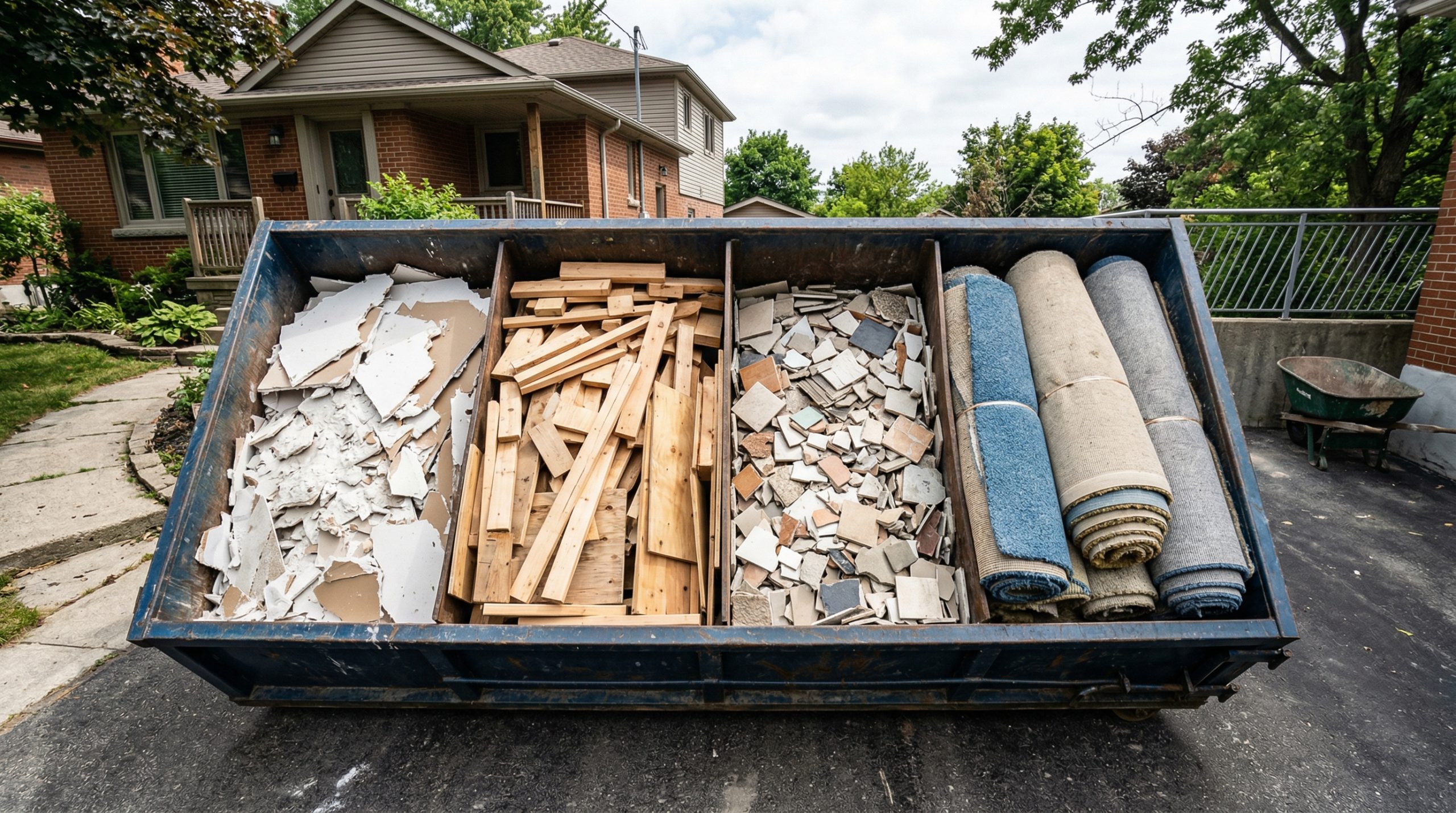
How you physically load your debris directly impacts how much junk you can fit inside. A neatly packed container maximizes your space and protects you from dangerous weight distribution issues. A sloppy pile wastes valuable capacity and might leave you needing a second delivery for your roll-off dumpster.
Once the driver takes your debris away, you should slowly inspect your newly emptied space. An empty room makes it incredibly easy to spot hidden structural issues. You will often notice foundational problems that were buried behind towering boxes for years.
Grab a flashlight and check your concrete foundation walls for a chalky white powder. This powder is called efflorescence. It indicates that moisture is actively pushing through your foundation walls and requires immediate attention.
You should also sweep and vacuum the concrete floors thoroughly to remove any lingering dust. Taking clear before and after photos is incredibly helpful if you ever need to file an insurance claim. We always recommend documenting a completely clean baseline before you begin any finishing work.
When organizing a basement cleanout in the GTA, an 8 yard or 14 yard disposal bin handles most standard homes perfectly. Light decluttering works in an 8 yard container. A full gut renovation typically requires a 14 yard or 20 yard option.
Yes, you can. Most old furniture is perfectly acceptable in a mixed waste container. This includes heavy sofas, broken dining chairs, wooden bookshelves, and metal filing cabinets.
A light purge with two motivated people usually takes four to eight hours. A completely packed space can take two full days with a team of three people. Pre sorting your items by zone before you start loading significantly speeds up the entire process.
Professional GTA junk removal teams use thick wooden boards under the metal wheels to protect your surface. A concrete or interlocking driveway is the safest placement option. If your driveway is too narrow, the container can sit safely on the street with an official city permit.