
What Can and Can’t Go in a Toronto Dumpster Rental Bin? Complete 2026 List


  • Home
  • Blog
  • What Can and Can’t Go in a Toronto Dumpster Rental Bin? Complete 2026 List
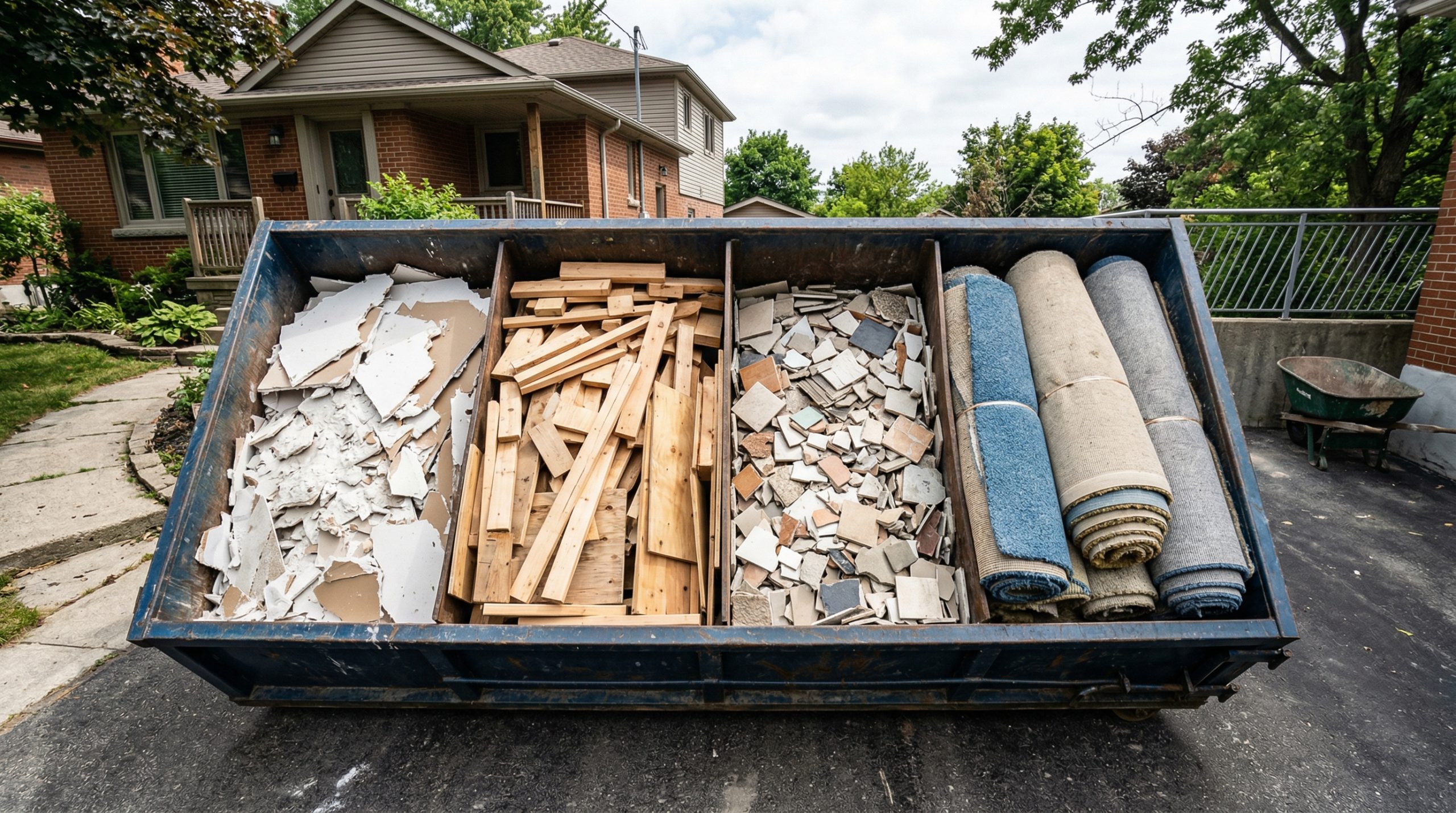
Overhead view of a Toronto disposal bin filled with sorted renovation debris

April 15, 2026

Most homeowners booking their first disposal bin rental assume “garbage is garbage.” It isn’t. Toronto’s disposal facilities, the provincial waste rules, and your bin rental company all draw lines around what can go in a roll-off bin and what can’t. Cross those lines and you’ll see contamination fees on the final invoice, sometimes more than the rental itself. Here’s the straight answer for 2026.

What Can and Can't Go in a Toronto Dumpster Rental Bin? Complete 2026 List - AHS Bins Toronto
What Can and Can't Go in a Toronto Dumpster Rental Bin? Complete 2026 List

Materials that are always allowed

  • Drywall, plaster, and lath
  • Wood, lumber, and framing offcuts (untreated)
  • Subfloor, plywood, OSB, and engineered wood
  • Carpet, underpad, and laminate flooring
  • Old kitchen cabinets and built-ins
  • Doors, windows (no frame glass loose), and trim
  • Insulation (batt, rigid, blown-in bagged)
  • Roofing shingles (asphalt, composite)
  • Brick, concrete, mortar (in a heavy-materials bin)
  • Soil, sod, and clean fill (in a heavy bin)
  • Yard waste, branches, and brush
  • Furniture and household junk for cleanouts
  • Non-Freon appliances (washer, dryer, dishwasher)
  • Toilets, tubs, and ceramic fixtures

Materials that are never allowed

These are banned by Ontario regulation, by Toronto’s transfer stations, or by every reputable bin rental company. Contamination fees for putting these in a regular bin run from $100 to $1,000 per item or load.
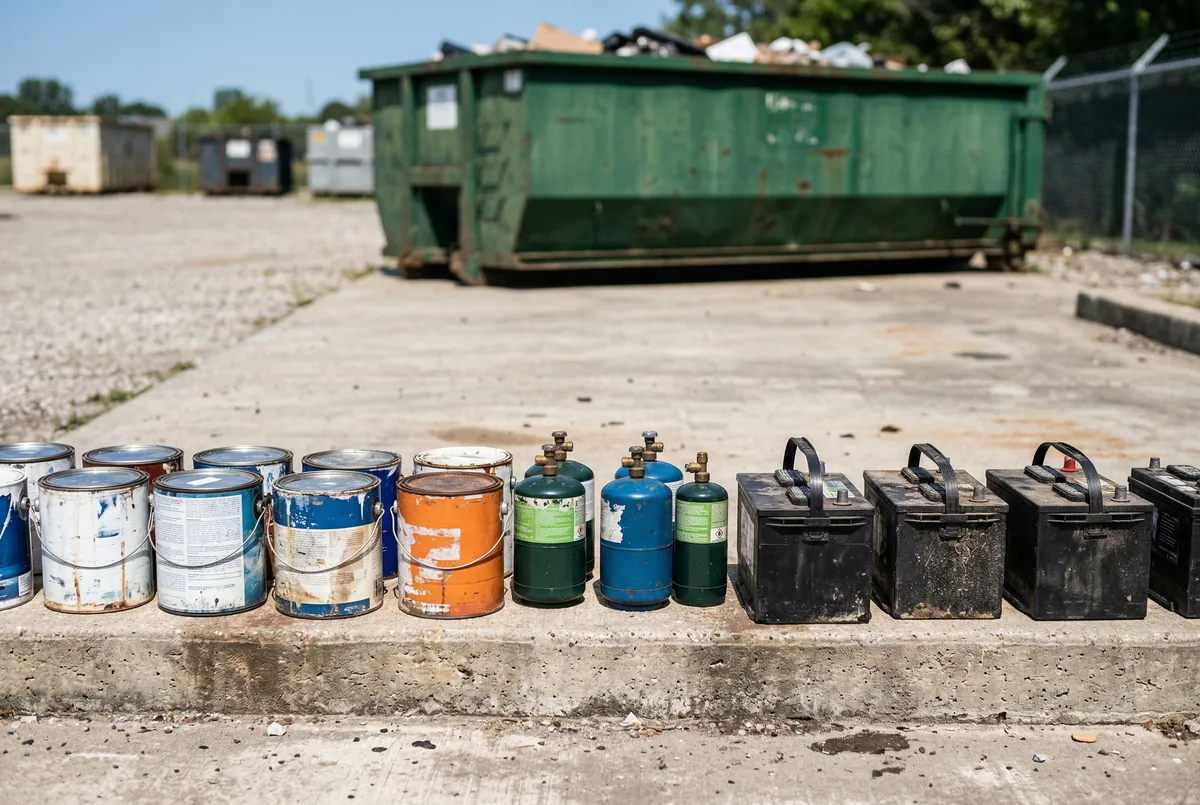
  • Hazardous waste. Paint, solvents, motor oil, antifreeze, gasoline, propane tanks, pesticides, and pool chemicals. Take these to a Toronto household hazardous waste program drop-off depot for free.
  • Asbestos. Old vermiculite insulation, popcorn ceilings from the 1970s, and pre-1990 vinyl floor tiles can contain asbestos. Asbestos requires a licensed abatement contractor and a sealed disposal stream. Never put it in a roll-off.
  • Refrigerants and Freon appliances. Fridges, freezers, air conditioners, and dehumidifiers must have refrigerant removed by a certified technician before disposal. Most municipalities have a separate appliance pick-up.
  • Tires. Banned from Ontario landfills. Drop at any tire retailer for free recycling under the Tire Stewardship program.
  • Electronics (e-waste). TVs, computers, monitors, printers, and small electronics. Free drop-off at municipal e-waste depots and many retailers.
  • Batteries. Lead-acid car batteries, lithium-ion power tool batteries, and household batteries. Free drop-off at hardware stores and Call2Recycle bins.
  • Medical waste. Sharps, syringes, expired prescriptions. Pharmacy take-back programs.
  • Liquids. Including any container with residual liquid. Empty and dry first.
  • Mattresses (sometimes). Many Toronto facilities now charge a separate per-mattress fee. Confirm with your rental company.
  • Animal waste, food waste, and biohazards.
  • Stumps and root balls (sometimes). Some facilities won’t accept them. Confirm before loading.
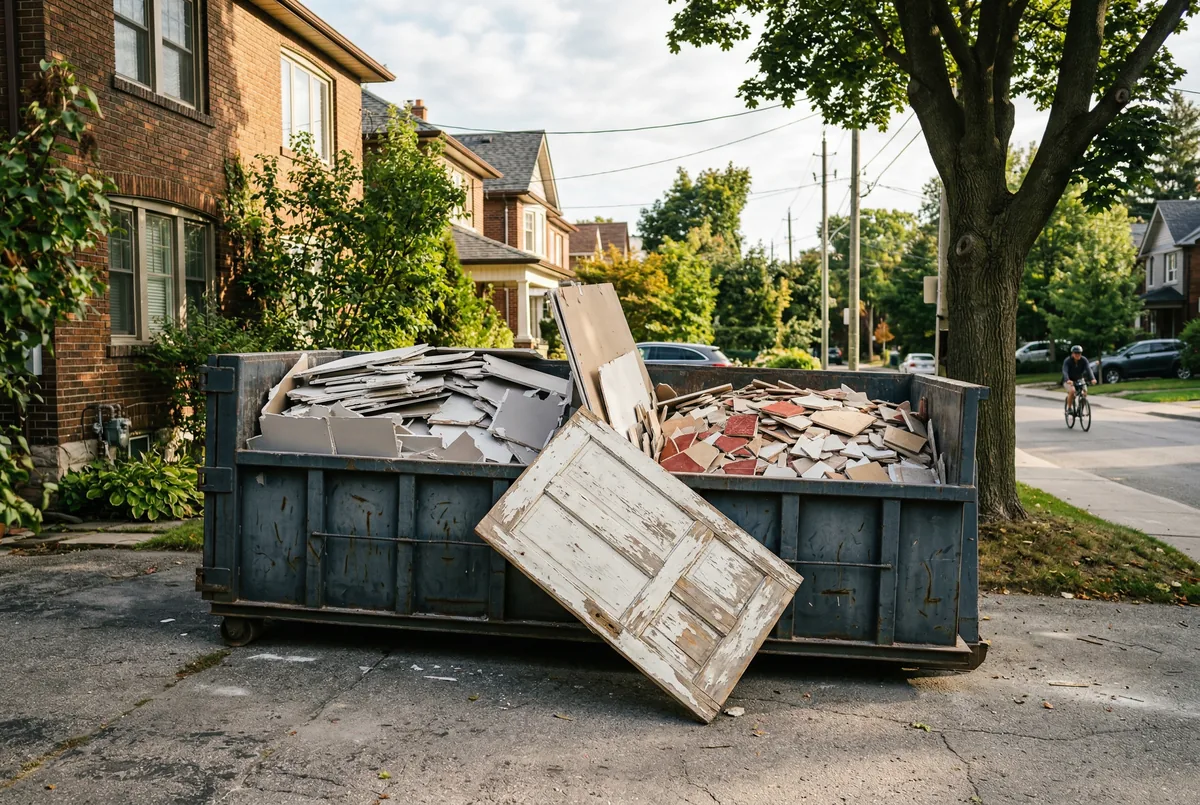
what can go in dumpster bin Toronto - body image 1
What Can and Can't Go in a Toronto Dumpster Rental Bin? Complete 2026 List

The grey-area items

Treated lumber and railway ties

Pressure-treated wood and creosote-soaked railway ties are accepted at most Toronto transfer stations but at a higher tipping rate. Your bin company should ask if your load includes these so they can route the bin to the right facility.

Drywall

Allowed in mixed loads in any quantity for residential bins. Pure drywall loads from large demos sometimes need to go to a gypsum-only recycler at a different rate.

Concrete and brick

Allowed but only in a “heavy bin” rated for the weight. Putting a half-yard of concrete in a regular bin will trigger a weight overage. Always disclose concrete or masonry up front.

Yard waste

Branches, brush, and clean leaves are accepted. Mixed yard waste with soil and roots is heavier than it looks and may push you into a heavy bin.

Old appliances

Stoves, washers, dryers, dishwashers: yes. Fridges, freezers, AC units, dehumidifiers: only if a certified tech has removed the refrigerant and tagged the unit as safe.
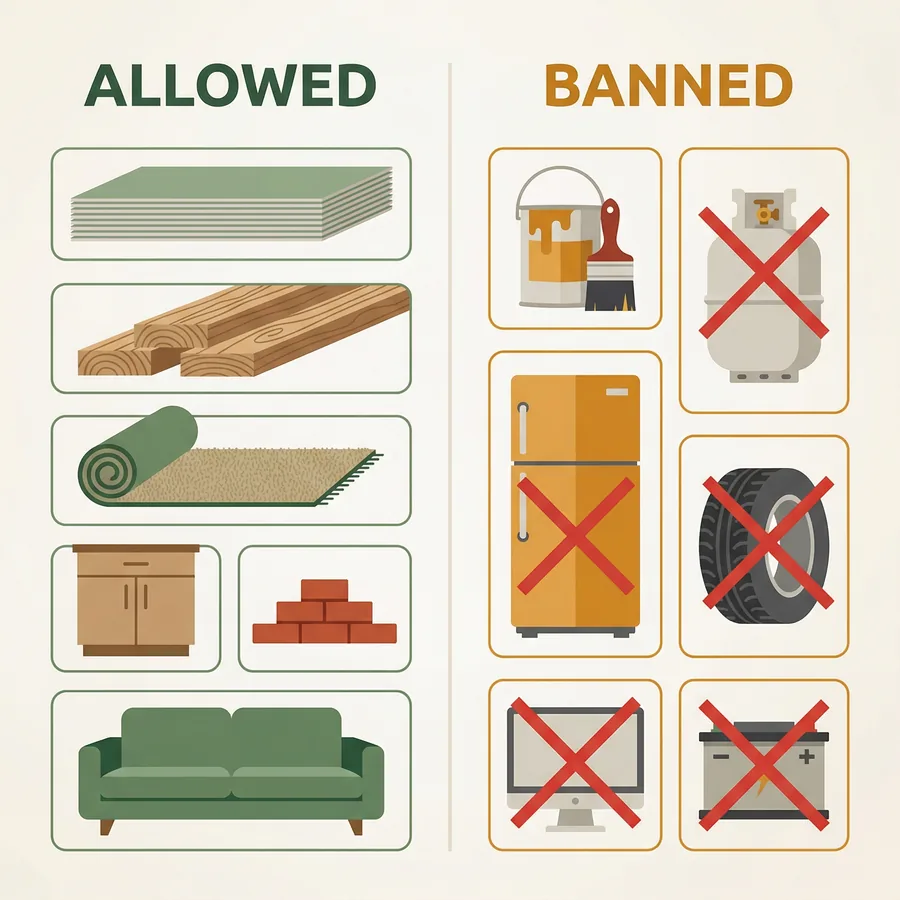
what can go in dumpster bin Toronto infographic
Toronto Bin Rental: Allowed and Banned List 2026 infographic

Why these rules exist (and why we enforce them)

Toronto-area transfer stations sort and weigh loads. Hazardous, banned, or contaminated material gets flagged at the scale, and the facility charges the hauler a contamination penalty. That penalty flows back to your invoice. We don’t mark it up — but we do pass it through, because the alternative is eating thousands of dollars per contaminated load. The City of Toronto waste services program offers free drop-off for almost every banned item, so there’s no good reason to risk it.
what can go in dumpster bin Toronto - body image 2
What Can and Can't Go in a Toronto Dumpster Rental Bin? Complete 2026 List
Green Bin 101 – City of Toronto

How to avoid contamination fees

  1. Walk the load before pickup. Pull anything on the banned list and set it aside for proper disposal.
  2. If you’re not sure about an item, call your bin company before loading it.
  3. For estate cleanouts, sort by category as you load: clean reno waste in the bin, electronics in a pile for the e-waste depot, paints and chemicals in another pile for hazardous drop-off.
  4. Never bury banned items at the bottom of a load hoping the driver won’t see. Transfer station staff will, and the fee is bigger than the savings.
  5. If you have hazardous material and no time to deal with it, ask us. We can refer specialty haulers.
Download the free quick guide

Save this as a PDF and keep it handy for your project planning.

Download: Toronto Bin Rental: Allowed and Banned List 2026

Frequently asked questions

Can I put a fridge in a Toronto dumpster bin?

Only if the refrigerant has been removed by a certified technician and the unit has a sticker confirming it. Otherwise it’s banned and the contamination fee applies.

What about a single can of paint?

No. Even one can triggers a hazardous waste contamination charge at the transfer station. Drop paint at a household hazardous waste depot for free.

Can I put renovation waste and household garbage in the same bin?

Yes for clean household items (clothes, toys, furniture, broken housewares). No for food waste, animal waste, or anything that would be classified as putrescible.

What’s the contamination fee if I make a mistake?

It depends on the item and the facility. Single banned items are usually $50 to $200. A whole load with mixed hazardous material can hit $1,000 or more.

What about mattresses?

Many Toronto facilities now charge $30 to $50 per mattress on top of the regular tipping fee. Ask your bin company before loading several mattresses.

Get a clean rental, no surprise fees

The cheapest bin is the one with no contamination fees on the invoice. If you have a tricky load — old fridges, a possible asbestos worry, mixed renovation and yard waste — contact our team before loading and we’ll tell you exactly how to split it. Or request a quick quote for a fast price on the right bin for your project.