
October 08, 2026
Premier Bin rental Service in Toronto and the GTA
Last updated:
Clearing out an office or retail unit requires careful planning. Between old furniture, fixtures, electronics, and paper, volume adds up quickly, and certain items cannot go into general trash. Managing commercial space cleanout waste requires a clear plan that sorts materials before hauling begins. This commercial waste checklist guides you step by step, from the initial walkthrough to booking a mixed-waste bin sized for a commercial clearout so your timeline stays on schedule.
Whether you are closing a location, relocating, or clearing a property for renovation, the core steps remain the same: sort materials first, identify regulated items, select the right bin size, and stage the work efficiently.
Before removing items from the building, walk the entire space to assess total volume. A detailed inventory identifies what can be resold or donated and highlights items requiring special disposal. Skipping this step often results in ordering an undersized dumpster bin or mismanaging electronic waste.
Quick take
Conduct your inventory at least two weeks before the cleanout date. This lead time allows you to arrange donation pickups, schedule electronics recycling, and reserve the appropriate disposal bin without incurring rush fees.

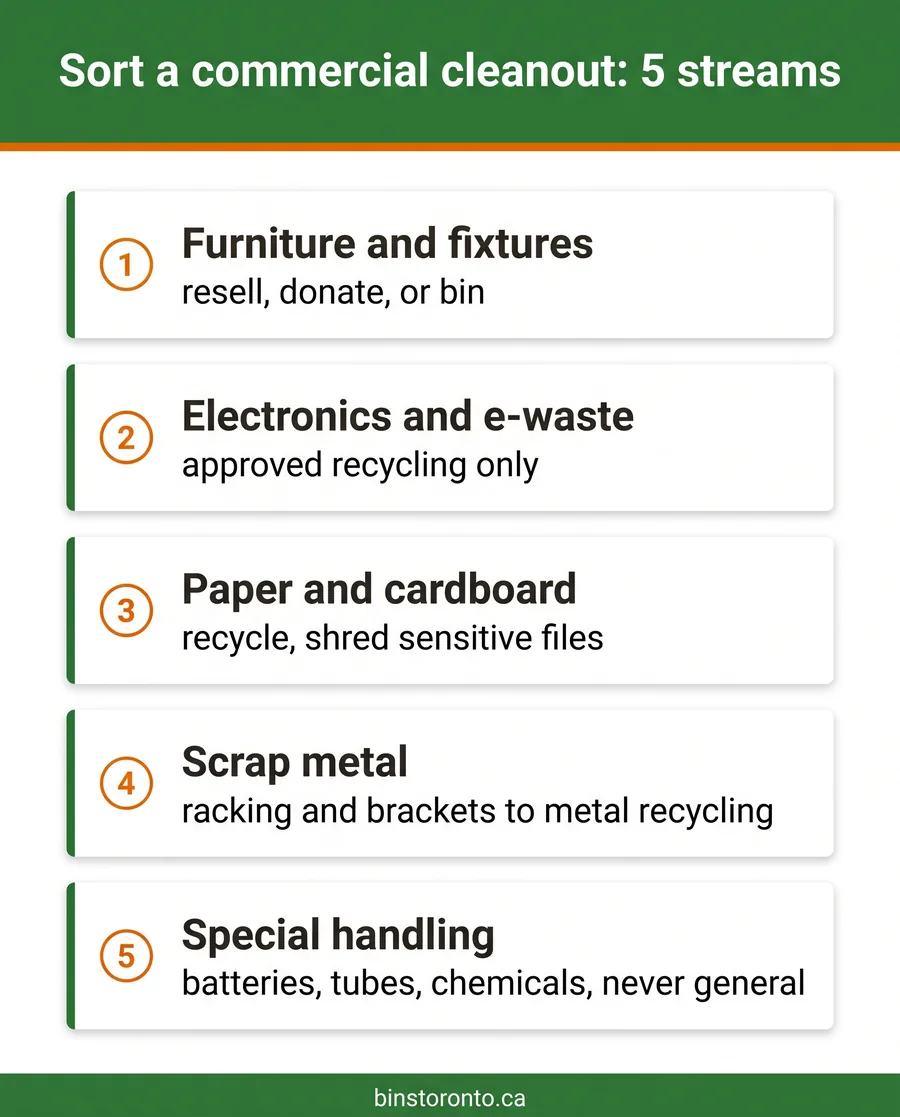
Sorting materials during removal, rather than combining them into a single pile, controls disposal costs and prevents prohibited items from entering landfills. Efficient office and retail clearouts categorize materials into five primary waste streams.
| Waste stream | Typical items | Disposal method |
|---|---|---|
| Furniture and fixtures | Desks, shelving, counters, seating | Resale, donation, or mixed-waste bin |
| Electronics and e-waste | Computers, monitors, printers, cabling | Regulated electronics recycling facility |
| Paper and cardboard | Files, packaging, stock boxes | Paper recycling (shred sensitive files) |
| Scrap metal | Racking, brackets, metal frames | Metal recycling or dedicated scrap bin |
| Special handling | Batteries, tubes, chemicals, paint | Authorized commercial hazardous-waste provider |
General non-recyclable waste, such as broken laminates or damaged carpet, goes into your rental bin. Separating reusable and recyclable items reduces the volume of commercial space cleanout waste that requires standard disposal bin space. For larger commercial projects, review our guide on the differences between residential and commercial bins to select the correct container.
Certain items commonly found in commercial offices and retail spaces are prohibited from standard waste bins and landfills. Placing banned items into disposal containers can lead to rejected loads or extra surcharges.
Computers, monitors, printers, phones, and networking equipment are regulated electronic waste. In Ontario, approved electronics recycling programs handle commercial e-waste, with many offering pickup services for bulk business items. Ensure all data drives are wiped or destroyed prior to removal.
Fluorescent tubes and compact bulbs contain mercury and require specialized handling. Similarly, batteries, ballasts, paint, solvents, cleaning chemicals, and toner cartridges must not be placed in general bins. Municipal household drop-off programs typically do not accept commercial quantities. Businesses must confirm eligibility with local facilities or arrange pickup through an authorized commercial hazardous-waste service. Review Ontario’s guidance on business and industrial hazardous waste management to ensure full regulatory compliance.
Do not mix hazardous items in standard bins
Placing fluorescent tubes, chemicals, or batteries in a general waste bin can result in rejected loads at transfer stations. Keep hazardous materials segregated throughout the entire clearout process.
Bin sizing should be based on the total volume of non-recyclable commercial space cleanout waste rather than the square footage of the building. Removing recyclable paper, metal, and reusable furniture significantly reduces the size of the dumpster required.
If your project involves structural renovation or heavy demolition materials alongside commercial space cleanout waste, consider a dedicated heavy-material dumpster or a full-service junk removal option to maintain project momentum.
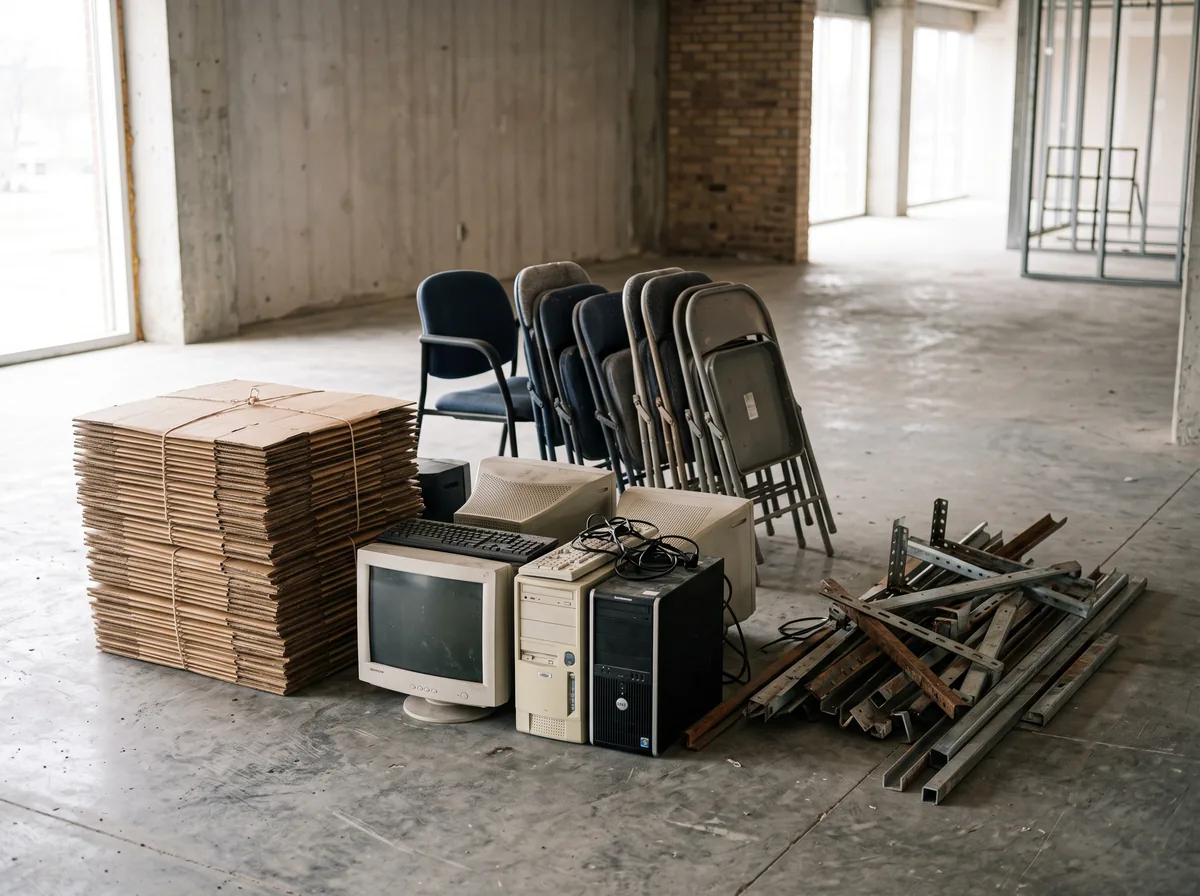
When relocating or renovating an active business, efficient staging minimizes operational disruption and labor costs.
Pro tip
Appoint a lead coordinator to oversee sorting. Having a dedicated person direct where materials are routed keeps waste streams clean and prevents recyclable items from clogging your general waste bin.
Download the free quick guide
A one-page checklist covering sorting procedures, special handling requirements, bin sizing, and workspace staging for office and retail clearouts.
Planning an office or retail clearout and need efficient waste management support? Bins Toronto provides right-sized commercial bins with transparent pricing across Toronto, Etobicoke, Markham, Scarborough, and the GTA. Book your bin online or contact our team to select the right disposal options for your project.