
September 23, 2026
Premier Bin rental Service in Toronto and the GTA
Last updated:
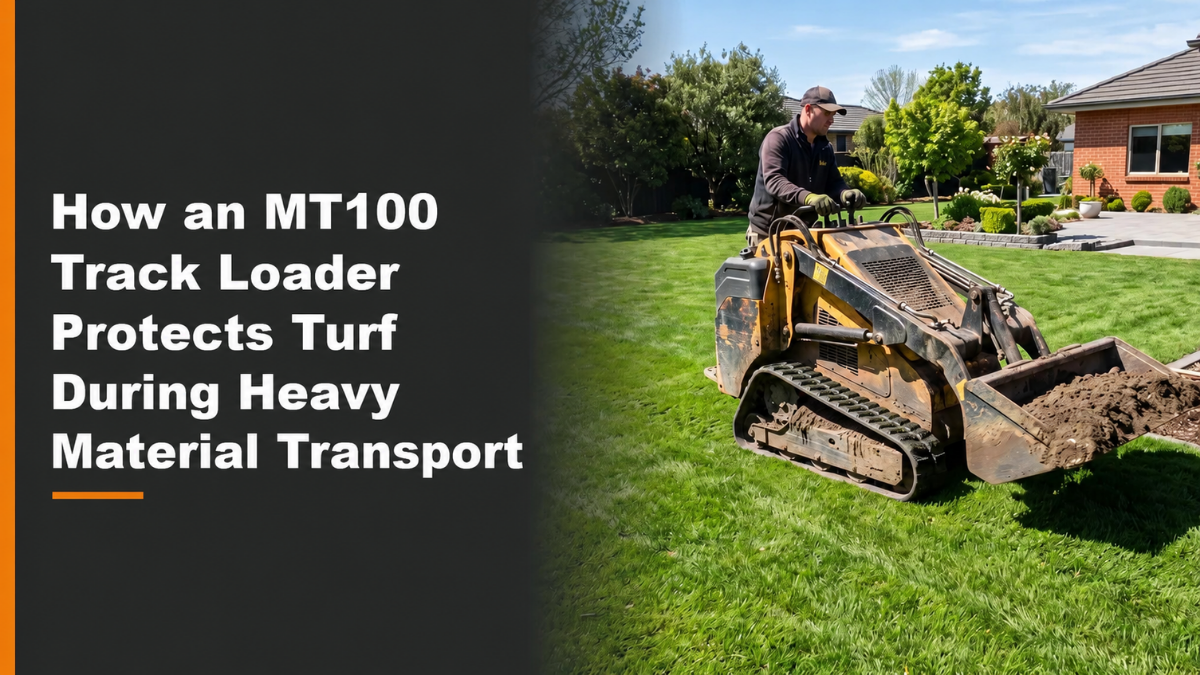
How does a loader heavy enough to move a pallet of paving stones leave a lighter footprint on your lawn than a loaded wheelbarrow? Ground pressure is the main reason, which is why questions about the MT100 track loader turf impact come up constantly from homeowners and contractors. How well a compact track loader protects your lawn depends on key mechanical principles, weight distribution, and proper operation during heavy material transport.
Understanding these mechanics, specifically the track system, weight distribution, steering behavior, and site limitations, helps ensure your landscape stays intact before you book a compact track loader.
Ground pressure is calculated by dividing the total weight of a machine by the surface area touching the ground. A track loader weighing thousands of pounds spreads its weight across long rubber tracks, exerting less pressure per square inch than a human wearing boots. This is the mechanical reason the MT100 track loader turf performance remains exceptional during heavy material transport.
According to Bobcat’s official MT100 specifications, the machine exerts 5.25 psi on standard tracks and drops to 3.97 psi with the optional wide-track kit. For comparison, an average adult walking across a lawn exerts 5 to 8 psi per footstep. In a wide-track configuration, the loader exerts less pressure on grass than standard foot traffic.
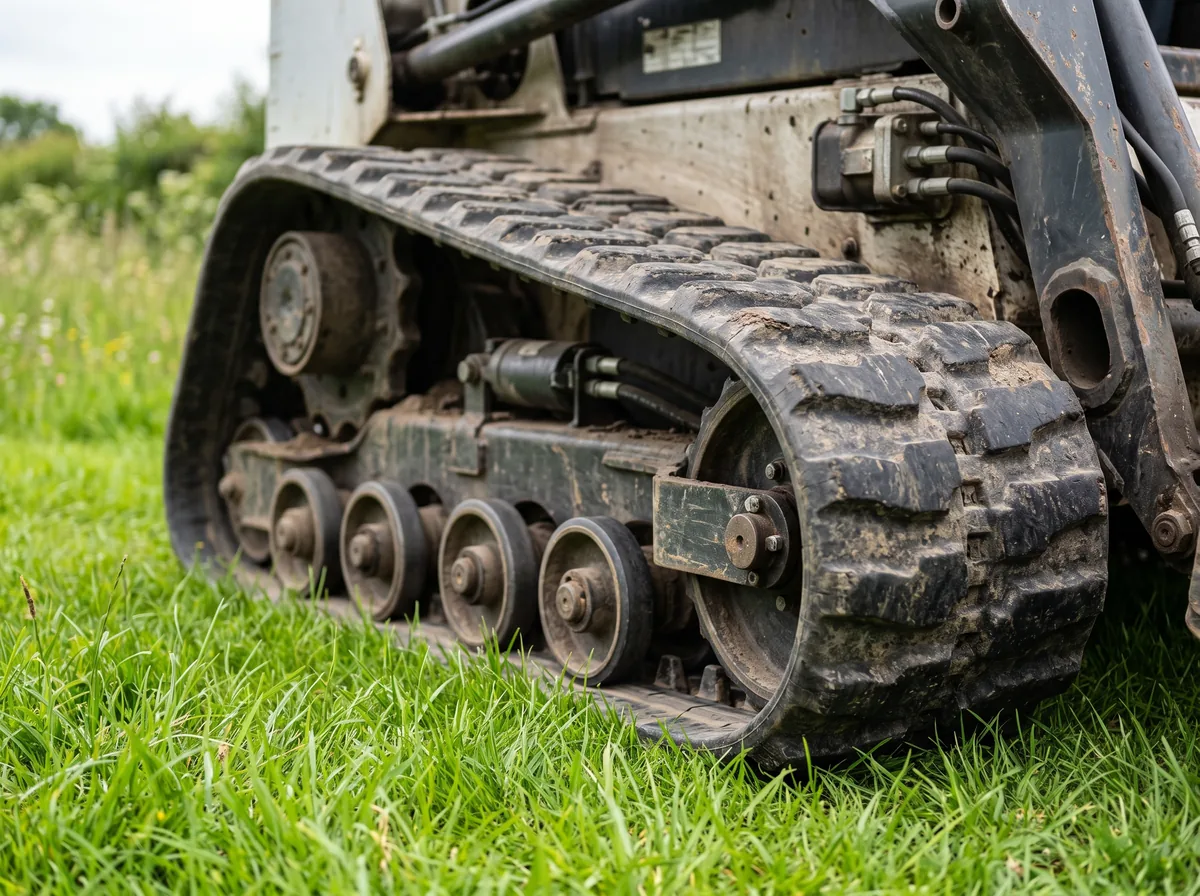
The rubber tracks perform two critical functions during material transport. First, they distribute weight continuously along the frame rather than concentrating load onto four points. Second, the flexible rubber conforms slightly to minor soil contours instead of digging into high spots. Multiple frame rollers beneath the tracks keep weight distributed evenly along the ground contact path.
While this design optimizes the MT100 track loader turf relationship, improper operation can still cause surface compression. However, properly distributed tracks typically limit damage to light compression rather than severe, torn ruts.
Static ground pressure ratings reflect an empty loader. Loading the bucket with soil, stone, or pavers shifts weight forward onto the front rollers. Extending or raising a heavy bucket increases pressure at the front edge of the tracks, creating localized high-pressure areas on the grass.
To minimize turf impression during heavy material transport, operators should carry loads as low and close to the machine as possible. This operational habit keeps weight centered over the track system and prevents lawn damage.
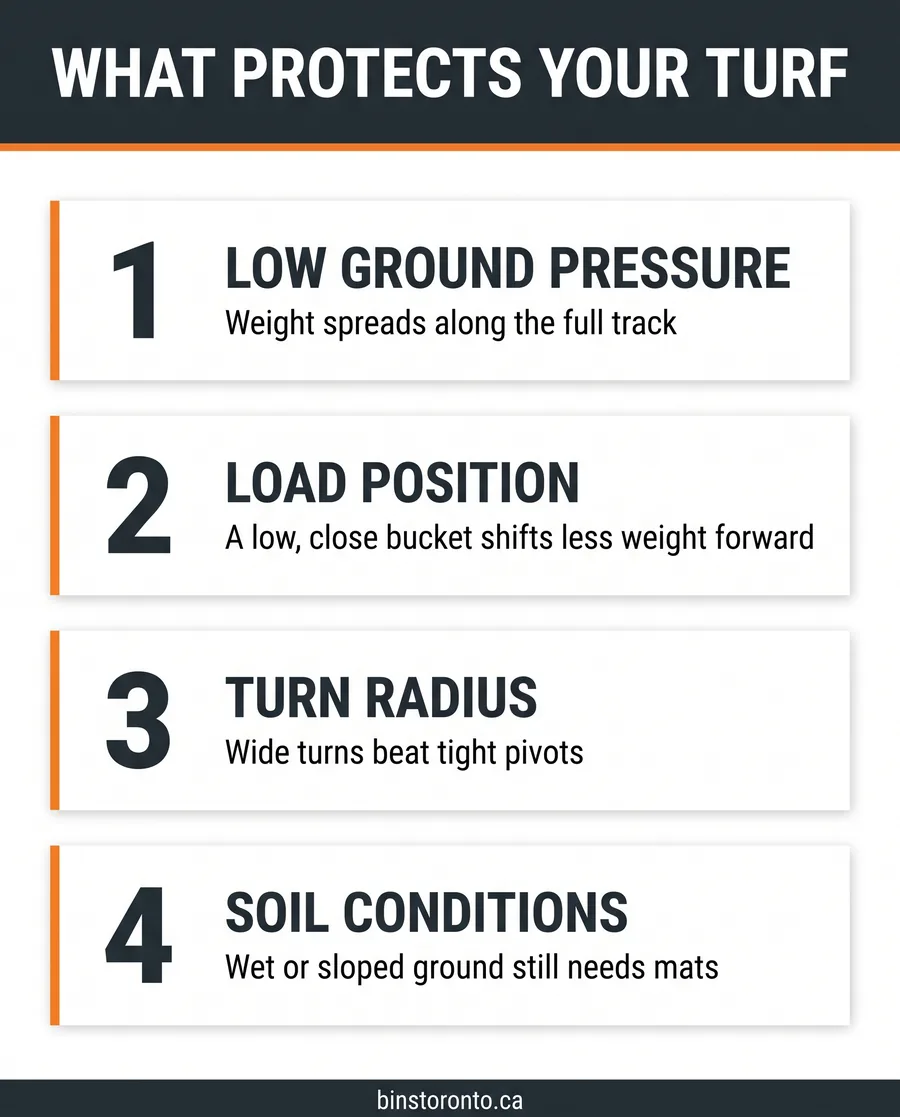
Compact track loaders maneuver using skid-steering, running one track faster than the other or counter-rotating them to pivot in place. While effective in tight spaces, sharp turns scrub rubber treads sideways against grass blades and root structures, creating the greatest risk for lawn damage.
Planning wide, gradual turns prevents tread scrubbing and protects root systems. Smart route planning is just as critical to lawn protection as the loader’s low ground pressure rating.
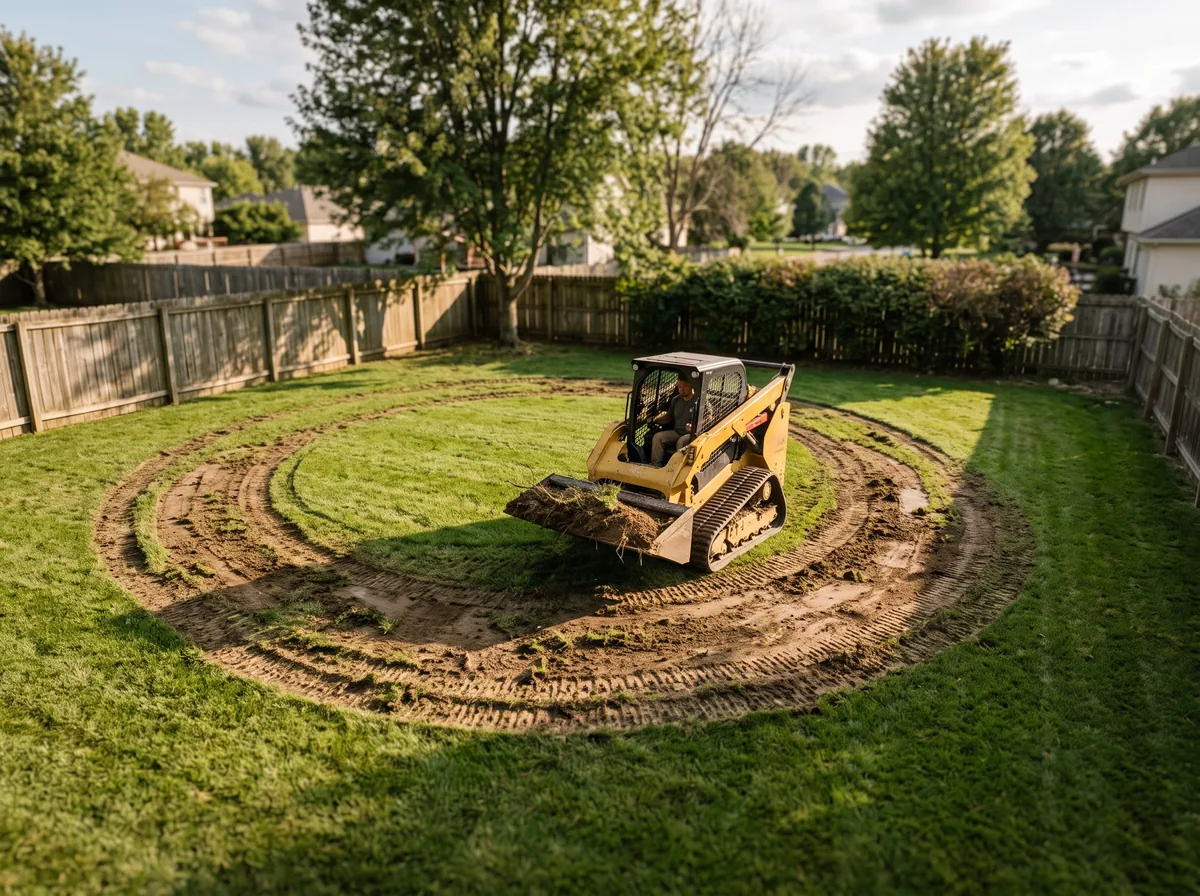
Saturated ground changes lawn mechanics. Wet soil compresses easily under any weight, regardless of track width. Steep slopes also shift equipment weight unevenly to one side or end of the track system. On wet soil, slopes, or high-traffic pathways, laying down ground protection mats or plywood sheets creates a secure barrier.
For dry, level residential lawns, standard track loader operation is typically sufficient. For a deeper breakdown of equipment performance, view our guide on how track loaders compare with wheel loaders.
Download the Free Quick Guide
A printable guide to planning travel routes, timing jobs around soil moisture, and selecting ground protection mats.
The MT100 is one of several compact track loaders designed for low ground pressure. Choosing the right machine depends on material weight, access constraints, and required reach. Evaluating the MT100 track loader turf compatibility involves looking at its narrow width and optional wide tracks, which allow it to pass through standard yard gates without causing major lawn disruption.
Yes. Wide tracks reduce ground pressure from 5.25 psi down to 3.97 psi by expanding the surface contact area. This reduction significantly minimizes soil compaction on soft or sensitive lawns during heavy transport.
Yes. Transporting heavy loads across wet ground, navigating steep slopes, or driving with a high, extended bucket shifts weight unevenly and increases ground pressure. Operating low to the ground and making wide turns protects turf integrity.
Operating capacity varies depending on the attachment used and load placement. Always consult the manufacturer’s rated operating capacity. Exceeding limits shifts machine balance forward, increasing turf pressure and risking lawn damage.
Ground protection mats are recommended on wet soil, steep grades, or high-traffic pathways where repeated passes occur. For short runs across dry, firm lawns, track loaders generally do not require mats.
Understanding MT100 track loader turf protection boils down to four key principles: low ground pressure spreads weight over a wide footprint, keeping loads low controls balance, gradual turns prevent turf tear, and wet soil requires protective matting.
Planning a landscaping project that requires moving materials across a lawn? Explore our construction equipment rentals or contact our team to choose the ideal loader for your job site.