
November 04, 2026
Premier Bin rental Service in Toronto and the GTA
Last updated:
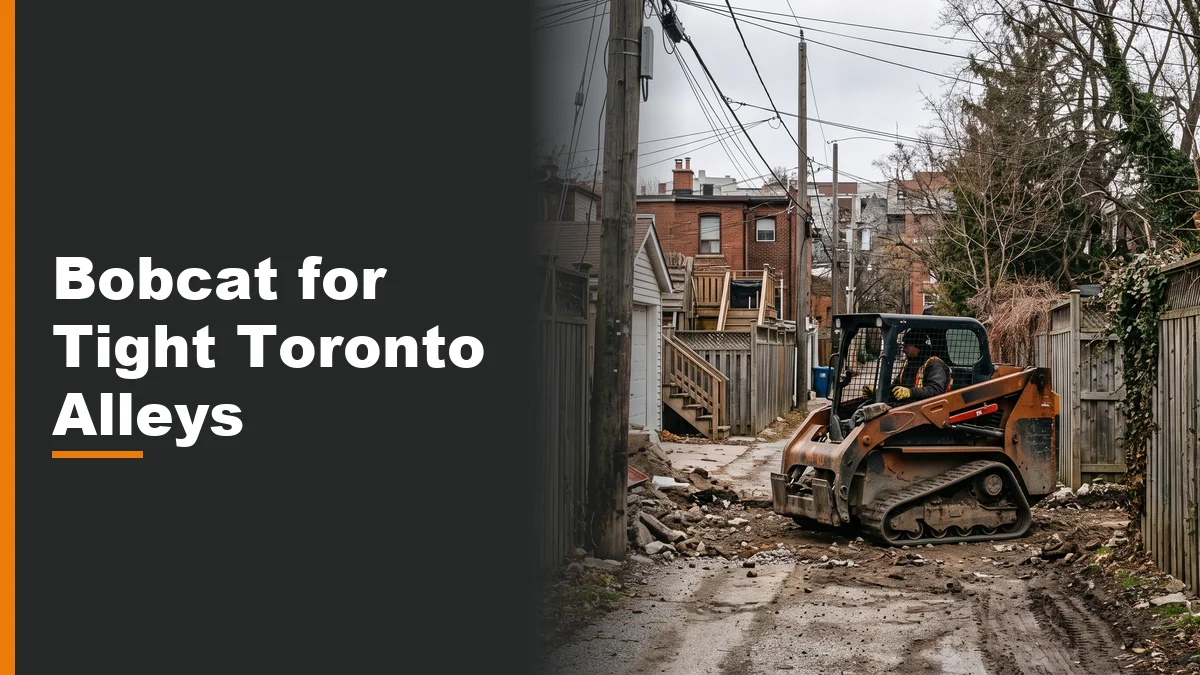
A contractor building a garden suite behind a Riverdale semi called us three days before delivery. The laneway behind the property measured barely nine feet between a neighbor’s fence and a hydro pole, so the standard excavator he had booked would not fit. Renting a compact machine solved the issue in one phone call. Older Toronto laneways and rear access points were laid out for horses and carts, not full-sized construction machinery. Relying on a bobcat for tight alleys is usually the right answer once you measure the gap prior to booking.
If you are planning a rear yard or laneway project downtown, here is what determines whether a compact loader will navigate your specific site access and what still needs to be done by hand.
Neighborhoods like Riverdale, Leslieville, Cabbagetown, and the Annex feature narrow rear laneways built decades ago. Hydro poles, leaning fences, overhanging tree branches, and parked cars reduce the usable clearance once you measure with a tape measure.
Full-sized skid steers and excavators often fail to clear these points. Choosing a bobcat for tight alleys provides the necessary maneuverability to access restricted downtown properties smoothly.
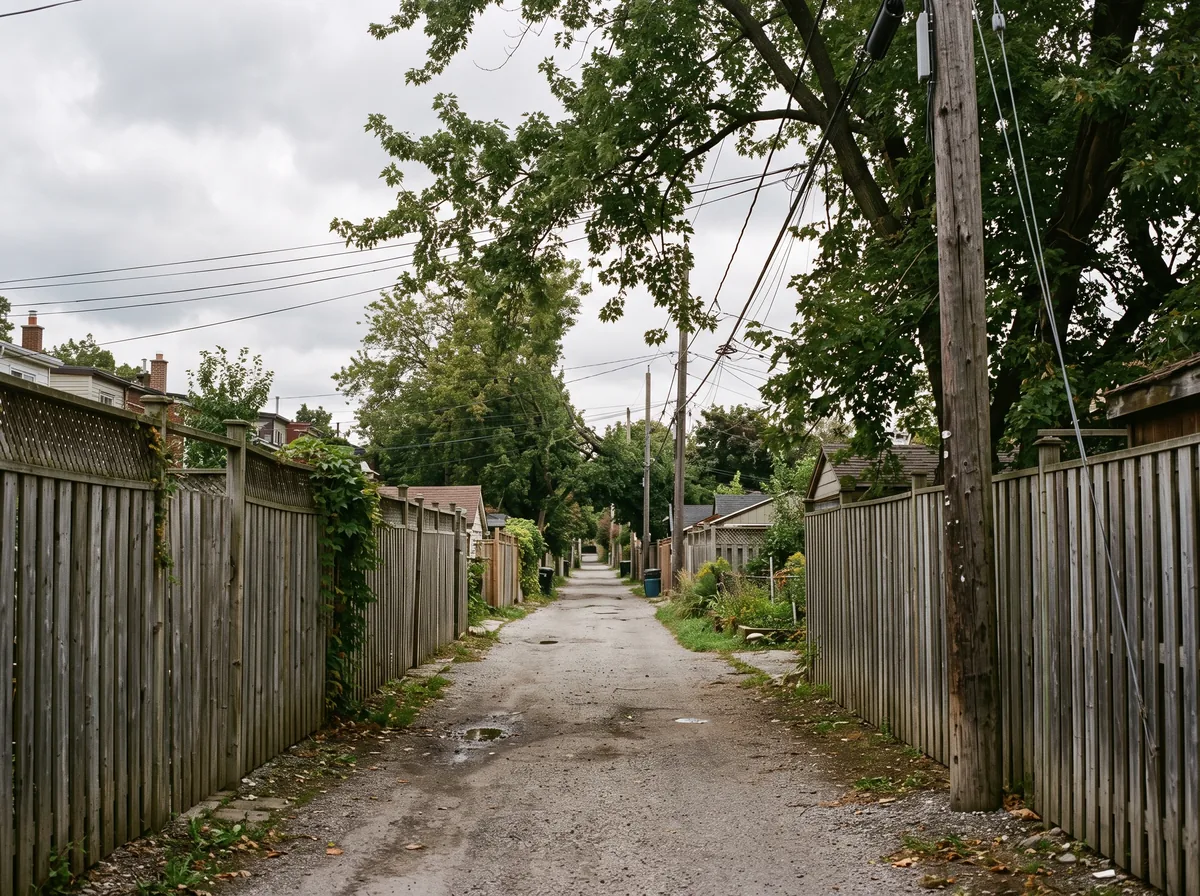
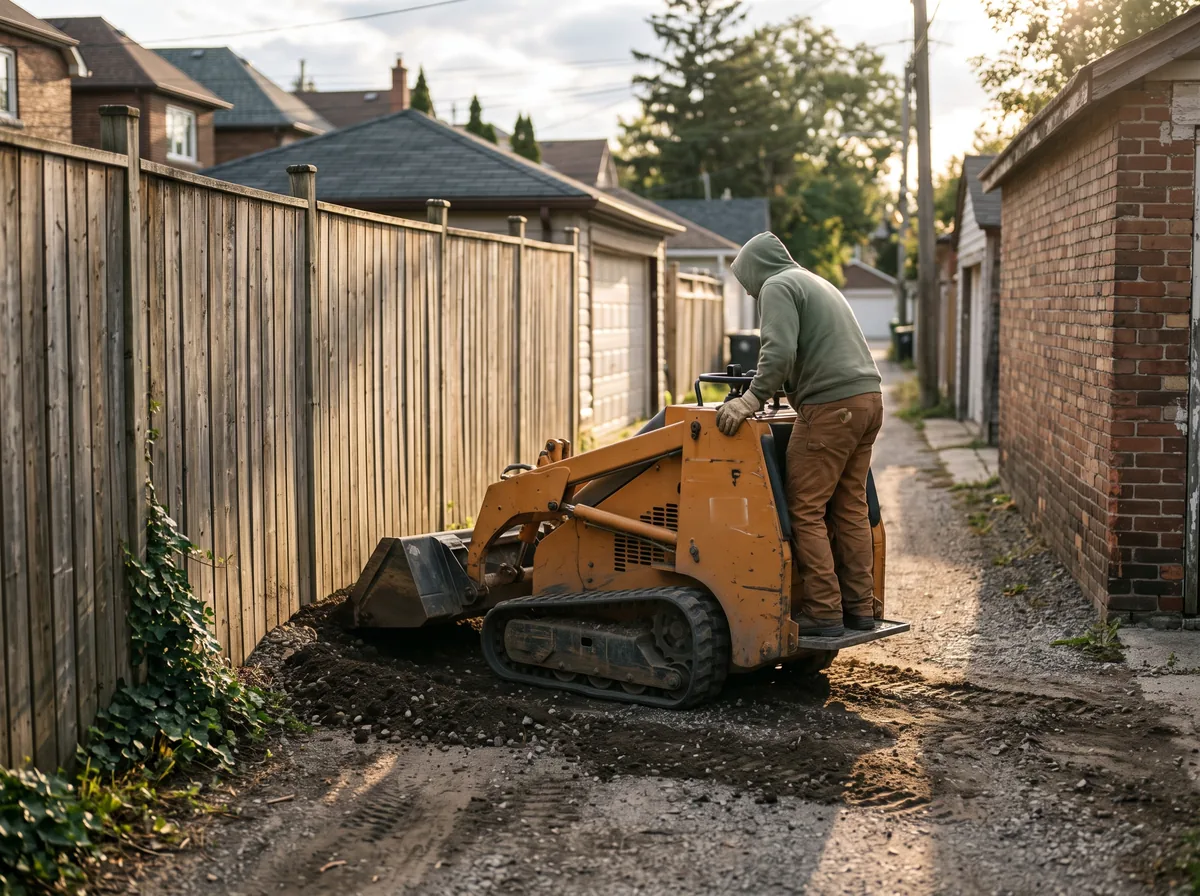
Compact and mini track loaders feature narrow profiles and tight turning radiuses engineered specifically for restricted access points, side yards, and urban laneways. Machines that pivot almost in place navigate tight turns that would trap larger loaders.
Compact sizing trades off some raw lifting capacity. Reviewing how different loader types stack up highlights these trade-offs when balancing maneuverability against bulk material moving speed.
People Often Ask
Will a compact loader fit through my laneway? Spec sheets do not account for side mirrors, bucket swing radiuses, or obstructions. Measuring your specific clearance route remains the only reliable confirmation prior to delivery day.
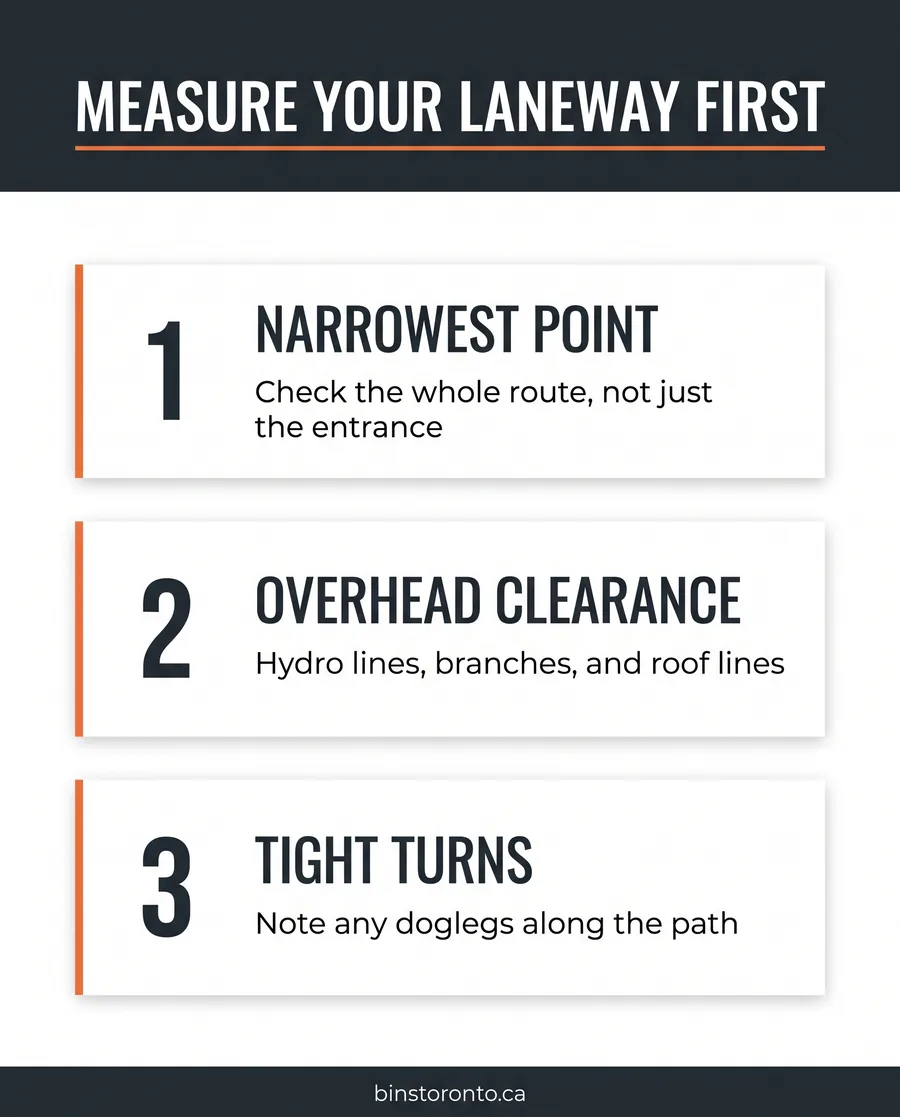
The Riverdale project succeeded because the contractor gathered exact measurements: narrowest point along the alley, overhead clearance, and turning radiuses. Taking 15 minutes to measure ensures that a bobcat for tight alleys arrives ready to work without facing blocked entries.
Save Your Money
Measuring access clearance beforehand prevents costly delivery cancellations and project delays resulting from oversized equipment.
Staging equipment or performing work on public laneways requires compliance with city street occupation bylaws. Consult the City of Toronto Street Occupation Permit guidelines to confirm permit requirements before staging equipment on shared rights-of-way.
Similarly, reviewing our guide on placement rules for downtown Toronto job sites outlines proper equipment and dumpster placement policies for tight urban access spots.
Using a bobcat for tight alleys handles heavy excavation and material transport effectively. However, precise detail work around fences, delicate structures, or acute corners still requires manual hand work with shovels and wheelbarrows.
Good to Know
Laneway widths, clearances, and permit regulations vary across Toronto neighborhoods. Verify specific dimensions and municipal permits prior to securing equipment.
Download the Free Quick Guide
A printable guide to measuring width, clearance, and turns before booking equipment for tight Toronto laneways.
Width requirements vary by machine model and attached implements. Measure the narrowest point of your alley path, accounting for parked cars or leaning fences, and compare it against exact machine specifications. A bobcat for tight alleys navigates much narrower gaps than standard equipment, but accurate site measurements remain essential.
Permits are required if equipment, staging areas, or operations occupy public rights-of-way. Checking City of Toronto street occupation regulations beforehand prevents compliance issues on delivery day.
Inadequate access on delivery day results in rescheduled drop-offs, potential return fees, and project delays. Measuring the entrance and full length of the alley in advance prevents delivery conflicts.
Compact loaders handle bulk excavation and heavy material movement efficiently, but manual detail work is still necessary along property lines, fence boundaries, and tight corners.
Residential noise bylaws restrict heavy machinery operation hours. Verify current Toronto municipal noise bylaws prior to starting site work.
Before booking equipment for a laneway excavation or construction project, follow these key steps:
If you have exact clearance dimensions and need advice selecting the right machinery, browse our construction equipment rental lineup or contact our team to select the ideal machine for your site.