
October 08, 2026
Premier Bin rental Service in Toronto and the GTA
Last updated:
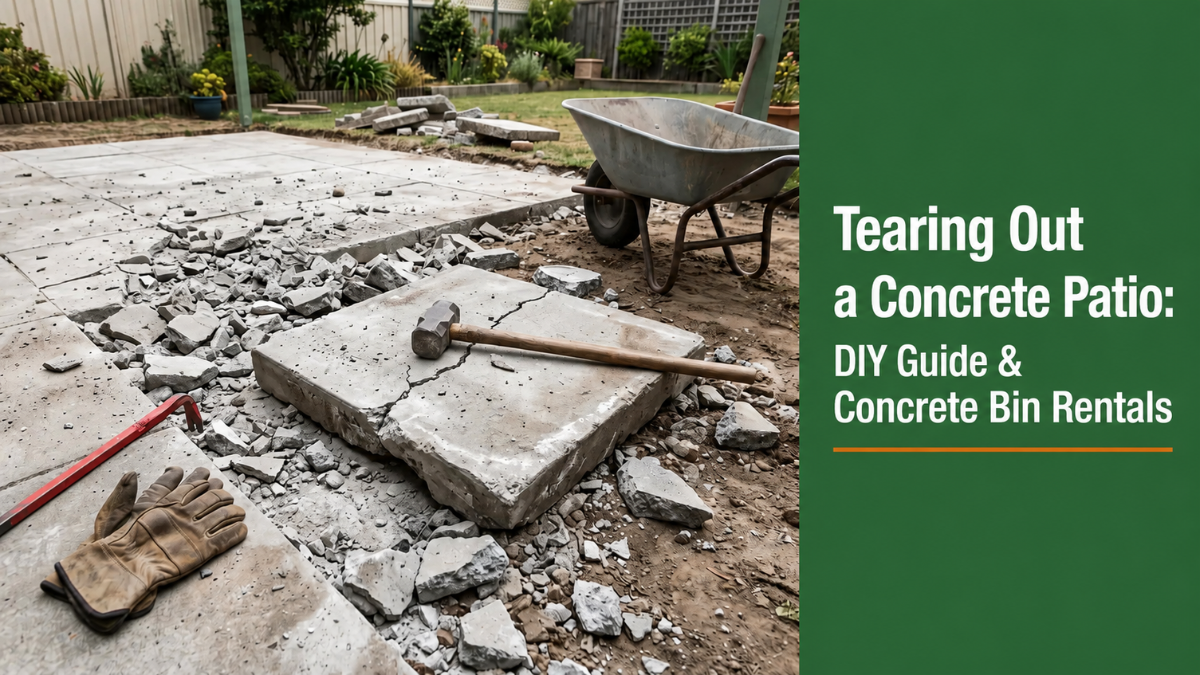
Tearing out an old concrete patio is one of the most satisfying weekend projects a homeowner can take on, and it is well within reach with the right plan. The work is straightforward: break the slab into liftable pieces, clear the rubble, and haul it away. What people often underestimate is the weight. Concrete is extremely dense, so even a modest 15 m² patio can produce over three tonnes of heavy rubble. That is why securing a dedicated concrete bin rental matters more here than on almost any other DIY home job. This guide walks through the step-by-step process and explains where a proper concrete bin rental fits into your plan so you are not left stuck with a pile of heavy debris.
Proper planning saves time and physical effort. Before taking the first swing, walk the patio area and answer three key questions: what lies beneath it, how thick is the concrete, and where will the heavy debris go? A typical residential patio slab is approximately 100 mm thick, sometimes reinforced with wire mesh or rebar, sitting on top of a gravel base or directly on soil.
If the patio is close to your house, gas lines, water pipes, or electrical conduits may run nearby or underneath it. In Ontario, submitting a free locate request through Ontario One Call before breaking ground is an essential safety precaution. Tap a few spots across the slab with a hammer to hear if it sounds hollow or dense; mesh and rebar will require extra cutting tools, but they will not stop progress.
Quick take
Book your concrete bin rental before demolition day, not after. Concrete is dense and fills containers by weight long before volume. Having the right dumpster on-site from the moment the first piece breaks ensures a clean, organized work area.
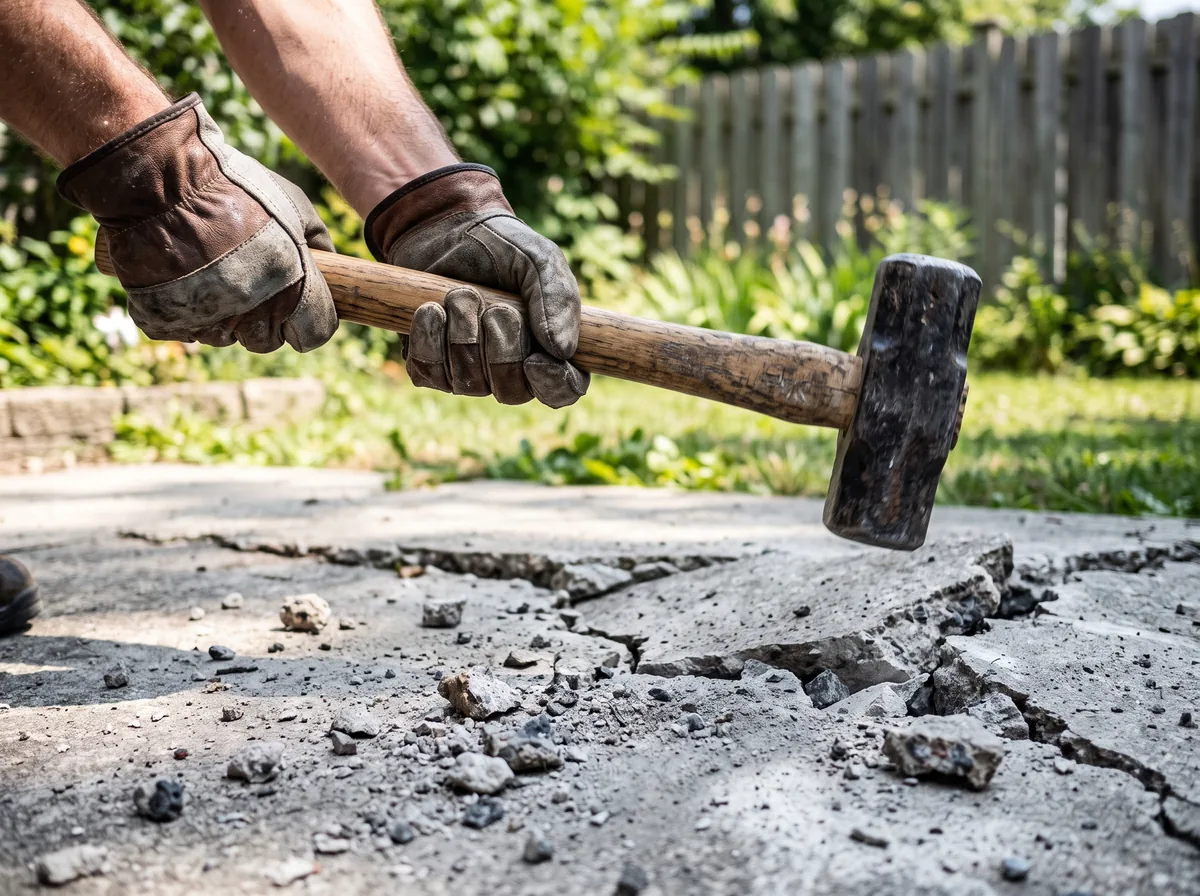
You do not need an entire commercial demolition crew’s equipment to remove a home patio, but using the correct tools turns exhausting manual labor into a smooth process. Renting heavy tools for the day is often the best choice for a DIY project.
Do not skip dust control & silica protection
Breaking, grinding, or cutting concrete releases respirable crystalline silica dust, a serious health hazard when inhaled. Dry cutting or grinding should always be avoided; use wet suppression or tools equipped with approved HEPA dust-extraction systems. Respiratory requirements vary depending on the specific task. In Ontario workplaces, using power tools for concrete breaking or removal often qualifies as Type 2 work requiring protection well beyond a standard N95 mask. Review Ontario’s silica construction guidelines to ensure complete safety compliance before operating power tools.
Work methodically across the surface. Concrete splits much easier when struck near an exposed edge rather than directly in the solid centre.
Pro tip
Rent a jackhammer for a single day to finish breaking up the entire slab in one focused session. Reserve the following day solely for hauling and loading your concrete disposal container to prevent physical burnout.
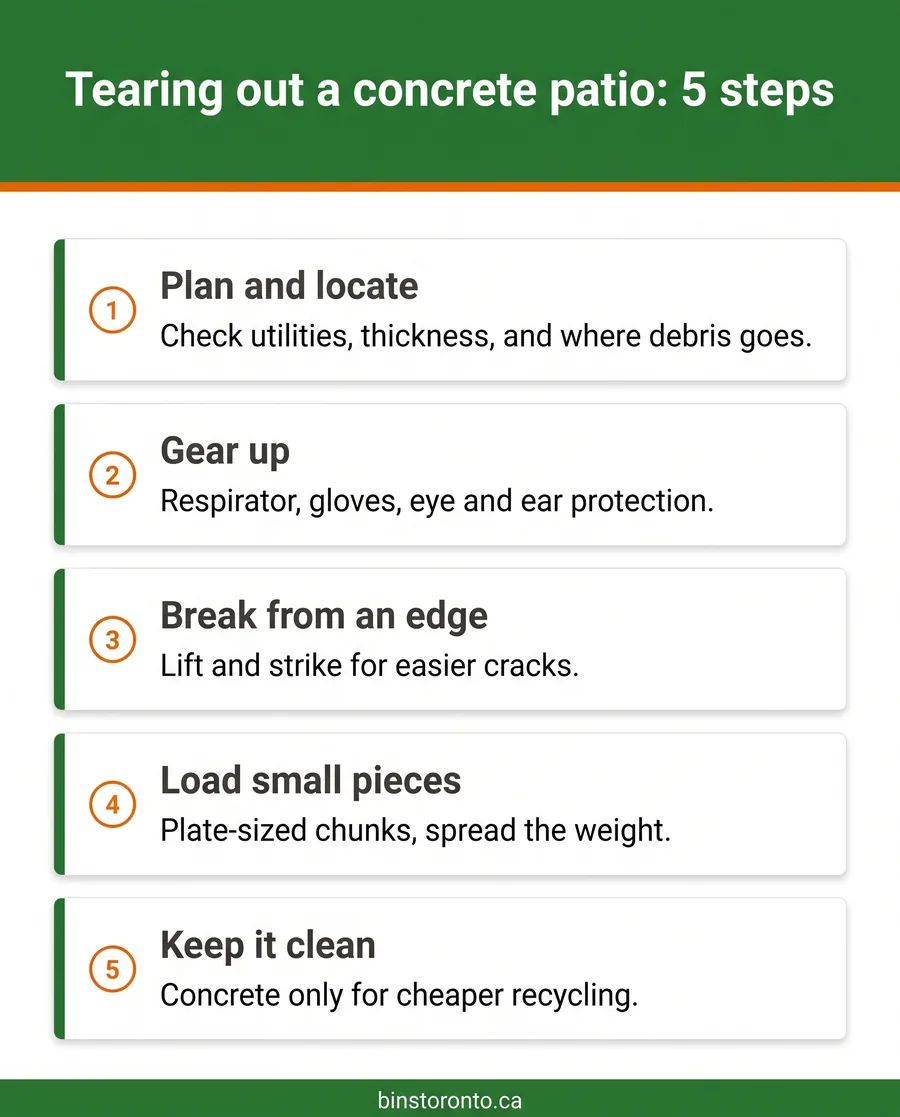
Disposing of concrete requires specific heavy-duty equipment. Standard waste dumpsters intended for household cleanouts or light renovation trash cannot handle the immense weight of broken masonry. A specialized concrete bin rental uses lower-sidewall, reinforced containers designed specifically to handle dense materials within road transport safety limits.
In addition, maintaining a clean load is crucial for cost efficiency. A clean heavy load consists exclusively of concrete, brick, or aggregate. Because these materials can be directly crushed and repurposed, disposal fees remain low. Mixing wood, trash, or general household debris turns it into a mixed load, incurring additional sorting costs. Read our detailed guide on the differences between clean and mixed loads to keep your project on budget.
| Consideration | Clean concrete load | Mixed debris load |
|---|---|---|
| What goes in | Concrete, brick, and aggregate only | Concrete plus wood, plastic, or general waste |
| Bin type | Heavy-material bin, smaller size | General waste bin |
| Weight handling | Rated for dense, heavy material | Rated by volume, lighter limits |
| Recyclable | Yes, crushed into new aggregate | Only after sorting and separation |
| Typical cost | Lower disposal cost | Higher, sorting fees may apply |
| Best for | A dedicated patio or slab teardown | A wider renovation with mixed waste |
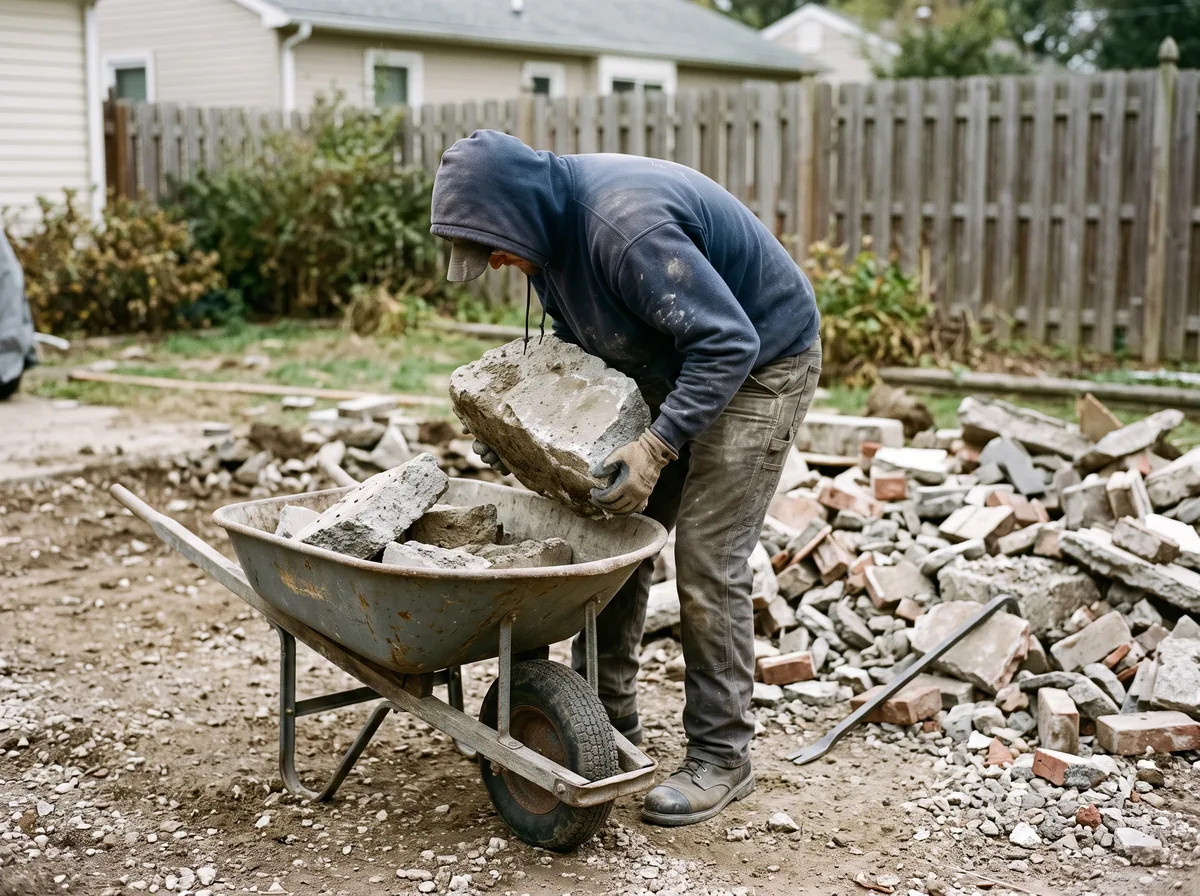
Concrete is fully recyclable. When a clean batch of broken patio material arrives at an aggregate processing facility, powerful crushers turn the rubble into recycled crushed stone. This recovered gravel serves as standard sub-base material for new roadbeds, commercial foundations, and driveway construction across Ontario.
Rebar and embedded wire mesh do not ruin recyclability; industrial facility magnets extract metal fragments easily during processing. Contamination such as large quantities of dirt, painted masonry, or wood debris, is what limits recycling efficiency. If your project involves multiple heavy materials, check our complete guide on properly disposing of concrete and asphalt in the GTA.
Did you know?
Recycled concrete aggregate (RCA) is widely used throughout construction in Ontario. The old patio slab you remove today will likely end up crushed and reused as base material for future infrastructure projects, keeping valuable material out of local landfills.
Download the free quick guide
A one-page checklist covering necessary tools, essential safety gear, breaking techniques, and selecting the correct concrete bin rental.
Ready to tear out your old patio slab without getting bogged down by heavy debris? Bins Toronto provides dependable heavy-material disposal services across Toronto, Vaughan, Mississauga, Brampton, and the GTA. Book your dumpster online today or contact our team to select the perfect container for your project.