
October 22, 2026
Premier Bin rental Service in Toronto and the GTA
Published:
There is a belief that floats around North York renovation projects, and it costs people money every single week: the idea that the city will take the mess away if you just bag it up small enough. It will not. Renovation waste disposal sits entirely outside your regular curbside collection, and the sooner you plan around that, the smoother your project runs. If you already know the volume you are dealing with, our bin rental service in North York is the shortest path from demolition day to a clear driveway.
What follows is a timeline rather than a list. Renovation debris does not arrive evenly, and the homeowners who spend the least on disposal are the ones who match their bin to the phase of work instead of leaving one parked on the driveway for a month.
The City of Toronto draws a hard line between household garbage and renovation waste. Drywall, lumber, doors, kitchen cabinets, vanities, countertops and roof shingles are all excluded from curbside pickup. They have to reach a City of Toronto drop-off depot under their own power, or leave your property in a bin.
North York is better served than most of the city here. Four of the seven municipal depots that accept renovation waste sit inside its boundaries, which is genuinely useful if your project is small. It is also the reason so many local homeowners underestimate what a full renovation produces and end up making the same drive nine times. If sorting and hauling is not how you want to spend your weekends, our junk removal service handles the loading as well as the disposal.
| Depot | Address | Best for |
|---|---|---|
| Bermondsey | 188 Bermondsey Road | Long hours, midweek runs |
| Dufferin | 35 Vanley Crescent | Weekday daytime drop-offs |
| Ingram | 50 Ingram Drive | Extended weekday access |
| Victoria Park | 3350 Victoria Park Avenue | East end of North York |
Hours shift seasonally and the weekend picture is uneven, so confirm on the city page before you load the car. Two of these four are closed weekends entirely, which is worth knowing before you spend a Saturday morning loading renovation waste into the back of a car.
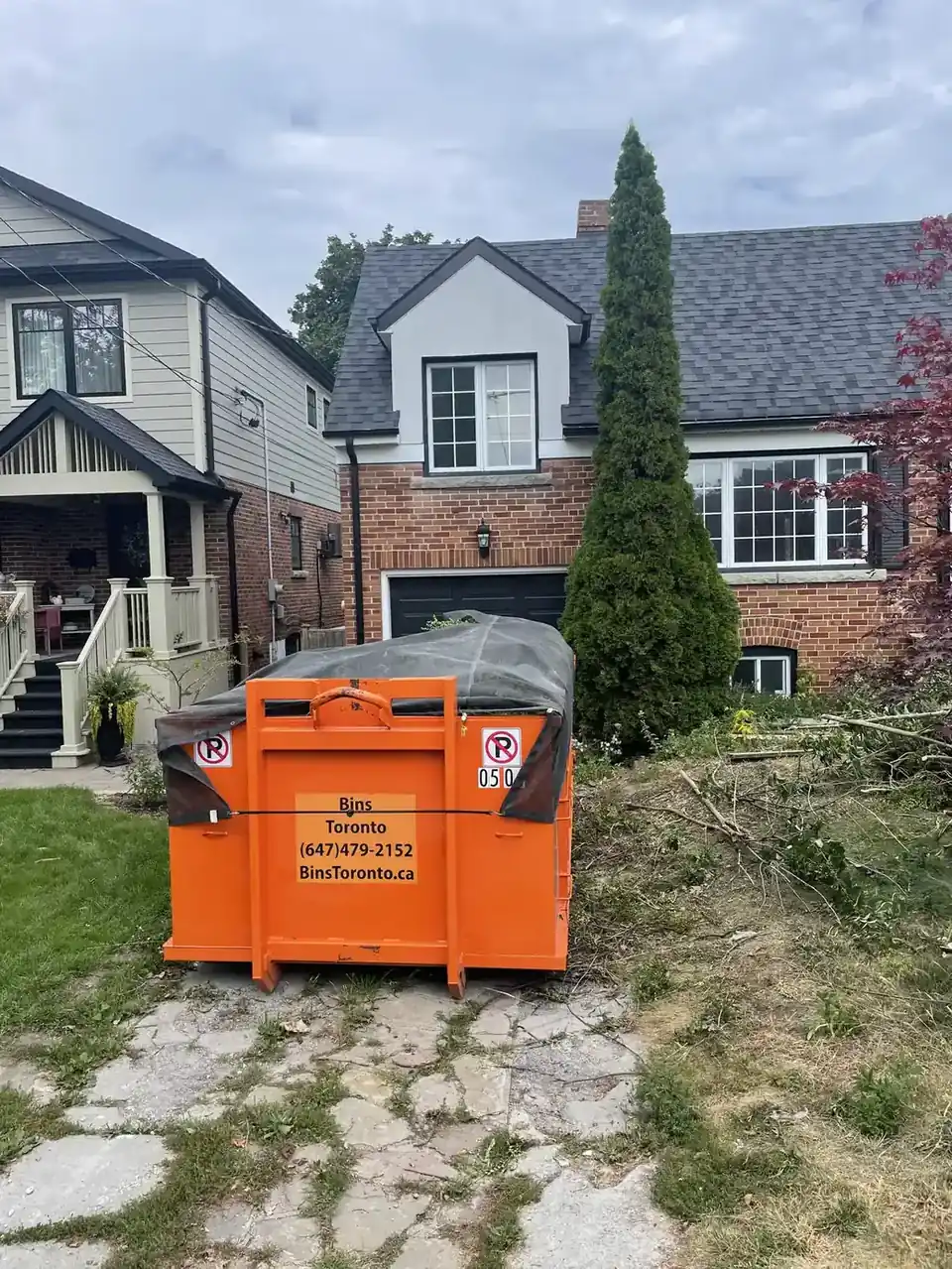
The single most common planning error is sizing a bin for the renovation waste you can picture. You picture the cabinets. You do not picture the subfloor, the underlay, the old tile, the baseboards, the closet shelving, or the three bags of assorted hardware that turn up behind the water heater.
A useful rule: whatever volume you first imagine, add half again. Renovation waste does not stack like furniture. Broken drywall and torn-up flooring trap air, and a bin fills faster in practice than it does in your head. Our dumpster bin rental range runs from 6 to 40 yards, and the gap between a 10 and a 14 is larger in practice than it sounds on paper.
City depots accept renovation lumber up to 1.2 metres (4 feet). The 7.5 cm diameter restriction applies to yard waste. However, the 1.2-metre limit on renovation debris quietly rules out most full-length lumber, intact doors and long trim, which is why a self-serve depot run stops working the moment you start removing framing.
Rough debris volume estimator
A planning estimate only. Actual volume varies with layout, material and how tightly the bin is packed. Confirm sizing with our team before you book.
Demolition compresses most of your renovation waste into a few days. This is the stretch where having a bin on site pays for itself, because the alternative is a growing pile that has to live somewhere until you deal with it. In a North York semi with a short driveway and no side access, "somewhere" usually means the only parking spot you have.
Load heavy material low and flat. Drywall and plaster go in first, spread across the floor of the bin rather than heaped at one end. Long lumber gets broken down before it goes in, not after the bin is half full and you are standing on a pile of renovation waste trying to swing a reciprocating saw.
Stop work and arrange professional testing before you touch anything, especially in buildings constructed before 1992, if you are disturbing insulation, floor tile, tile adhesive or textured ceiling finishes. Asbestos-containing material cannot go in a bin, cannot go to a depot, and cannot be handled as ordinary renovation waste. You must use an authorized disposal company for removal. Testing first is cheaper than the alternative in every possible way.
Once demolition ends, renovation waste output drops off a cliff. What you get instead is a steady dribble of offcuts, packaging, cardboard, foam and the plastic wrap that arrives around every new fixture. It is low volume and high nuisance.
This is the phase where a bin sitting idle on your driveway stops earning its keep. Most renovation schedules have a three or four week gap between the end of demolition and the start of finishing, and paying for a bin to hold cardboard through all of it is money spent on convenience you are barely using.
Customers should compare one extended rental against two separate deliveries and hauls, including extra-day charges. Depending on your timeline, two shorter bin bookings—one for demolition and one for the final push—can often cost less than a single long rental that accumulates daily fees while sitting empty.
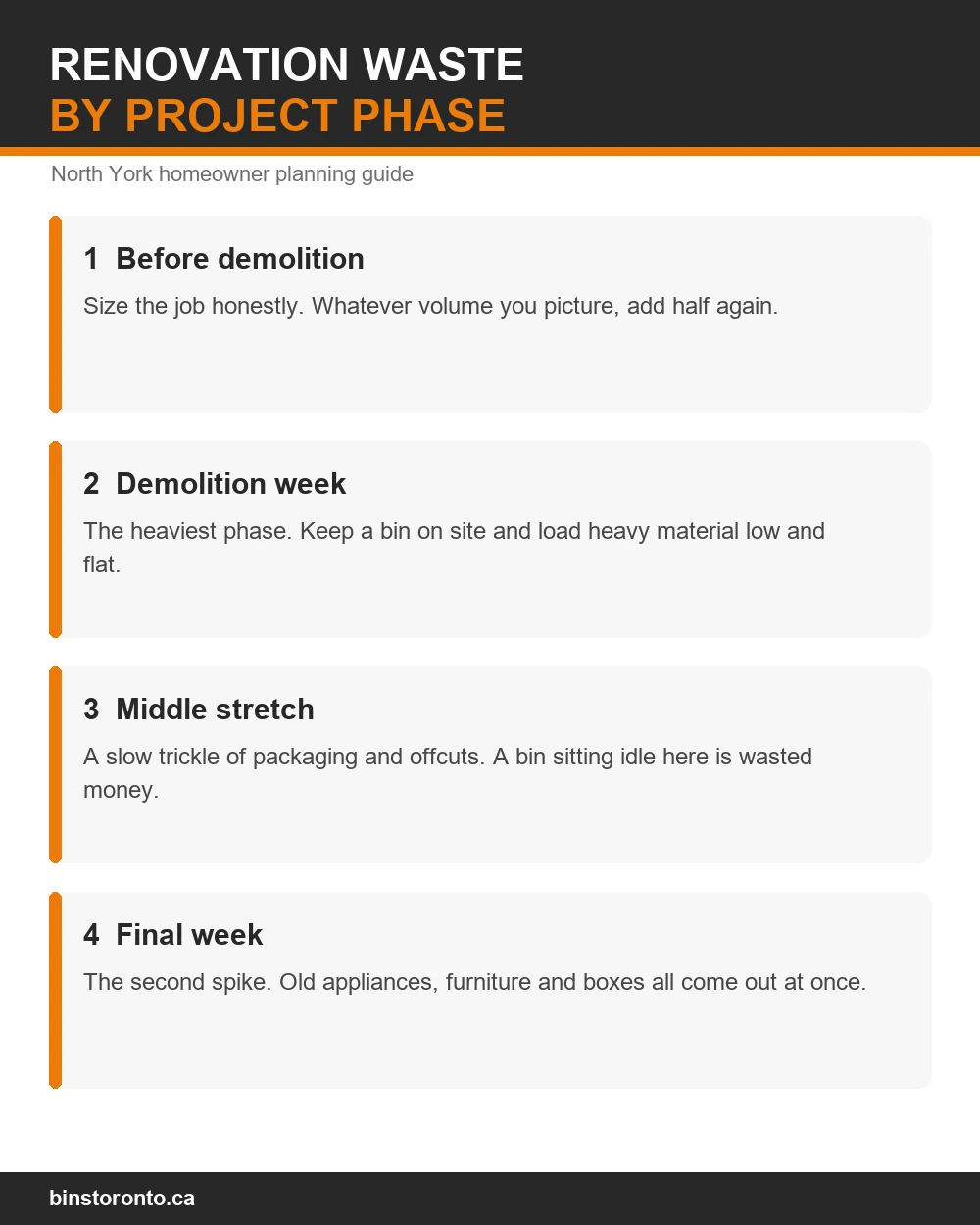
The last week of a renovation is the second renovation waste spike, and almost nobody plans for it. Everything that got moved rather than removed comes back into play at once: the old appliances in the garage, protective sheeting, the offcut pile, the boxes every new fixture arrived in, and whatever was cleared out of the room before work started and never went anywhere.
There is also a category of item that has been quietly waiting since day one. Old furniture that came out of the room. The previous vanity. A mattress from the spare bedroom that became the staging area. Renovation waste disposal at this stage is less about construction debris and more about a household clear-out that the project triggered. Plan the second bin for the week the trades finish, not the week after, or that pile will sit in your garage until spring.
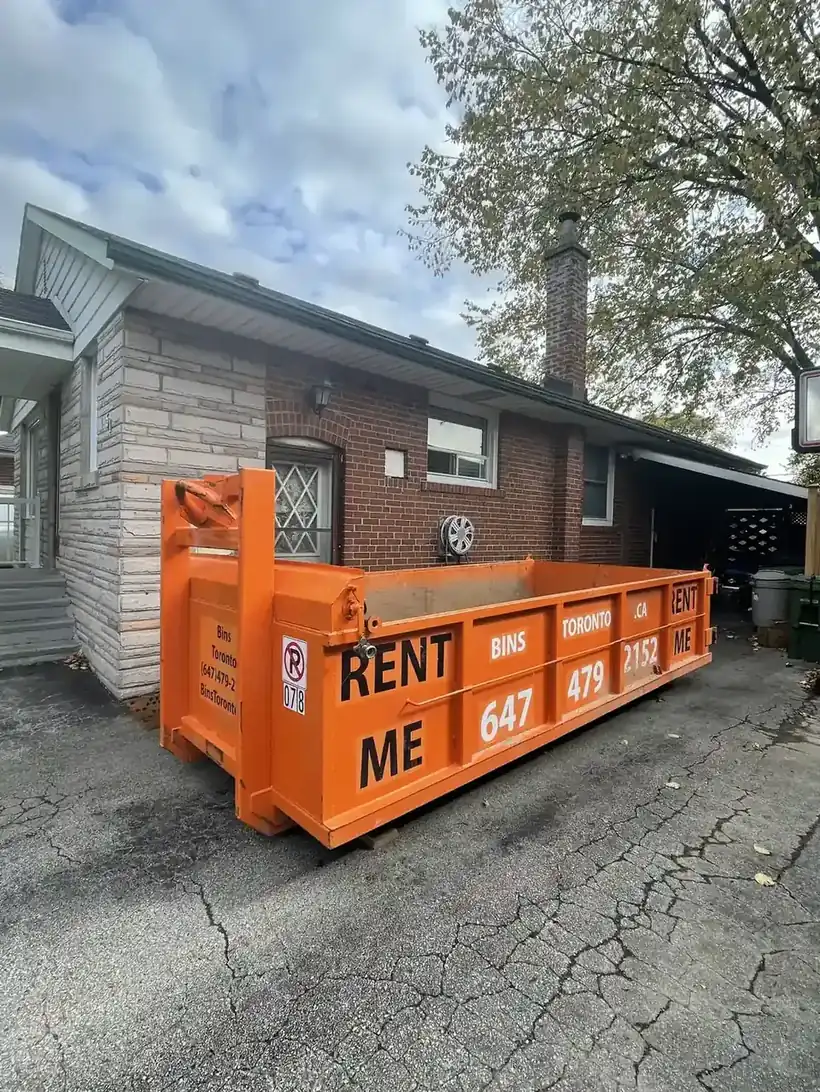
Three things move the number, and only one of them is the size of the bin.
If your project will generate significant concrete or soil, keeping it in its own load is the single highest-value renovation waste decision you can make. Our guide to clean versus mixed disposal loads covers where that line sits. Heavier jobs that need machine loading may also call for construction equipment rental rather than a bin alone.
This article is for general guidance only. Costs, municipal rules, depot hours and disposal regulations change. Bins Toronto is not liable for outcomes from actions taken based on this content. Confirm current requirements with the City of Toronto and with a qualified professional for your specific project, particularly where hazardous material may be present.
Download the free quick guide
A phase-by-phase checklist you can print and keep on site, including the four North York depot addresses and what each phase of work actually produces.
Download the North York renovation waste checklist (PDF)Bins Toronto handles renovation waste across North York and the neighbouring communities of Vaughan, Thornhill and Richmond Hill, with all-in pricing and no hidden fees. Check the full list of areas we deliver to, and when you know your window, book your bin rental online and keep the driveway clear for the part of the project that actually matters.