
October 08, 2026
Premier Bin rental Service in Toronto and the GTA
Published:
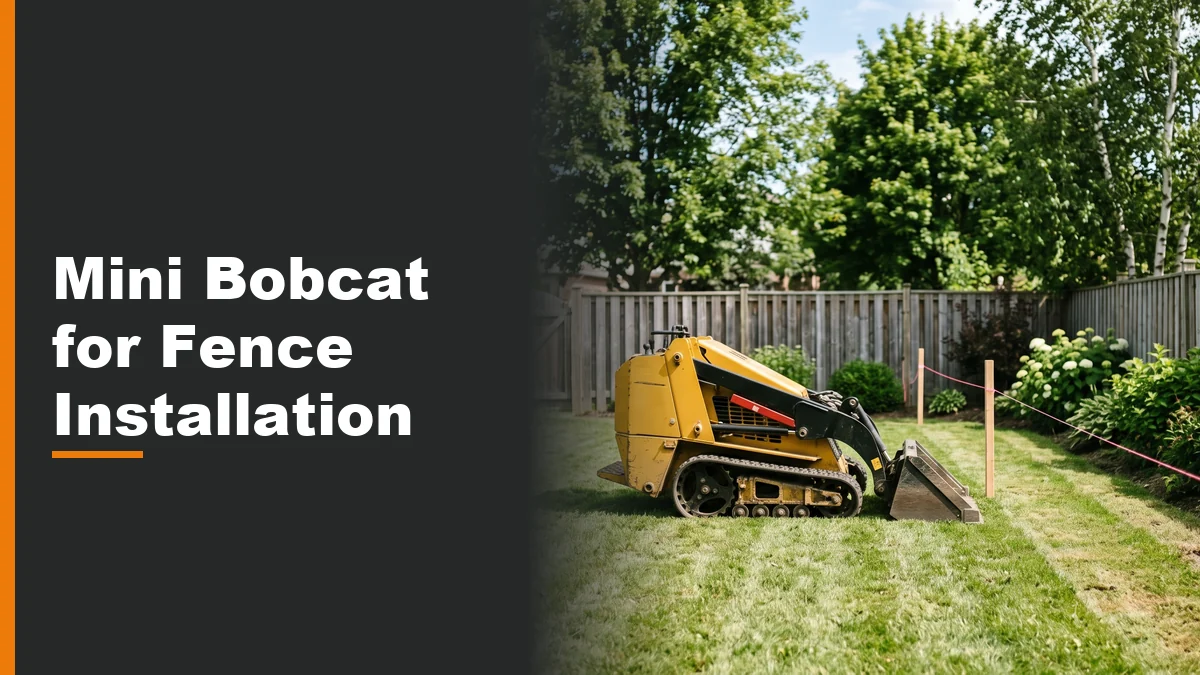
Do you actually need a full sized skid steer to put up a fence, or will a mini bobcat for fence installation get the job done in a fraction of the time? For most residential fence runs in 2026, the answer is the smaller machine. A mini bobcat squeezes through a standard side gate, digs a clean post hole in a fraction of the time a manual auger takes, and does it without the wide turning radius that makes a full sized loader awkward in a backyard. If you have not looked at renting compact equipment before, a fence line is one of the more approachable first projects to try it on.
Here is the step by step version: what to check before the machine shows up, how to use it through the actual dig and backfill, and where people most often get it wrong.
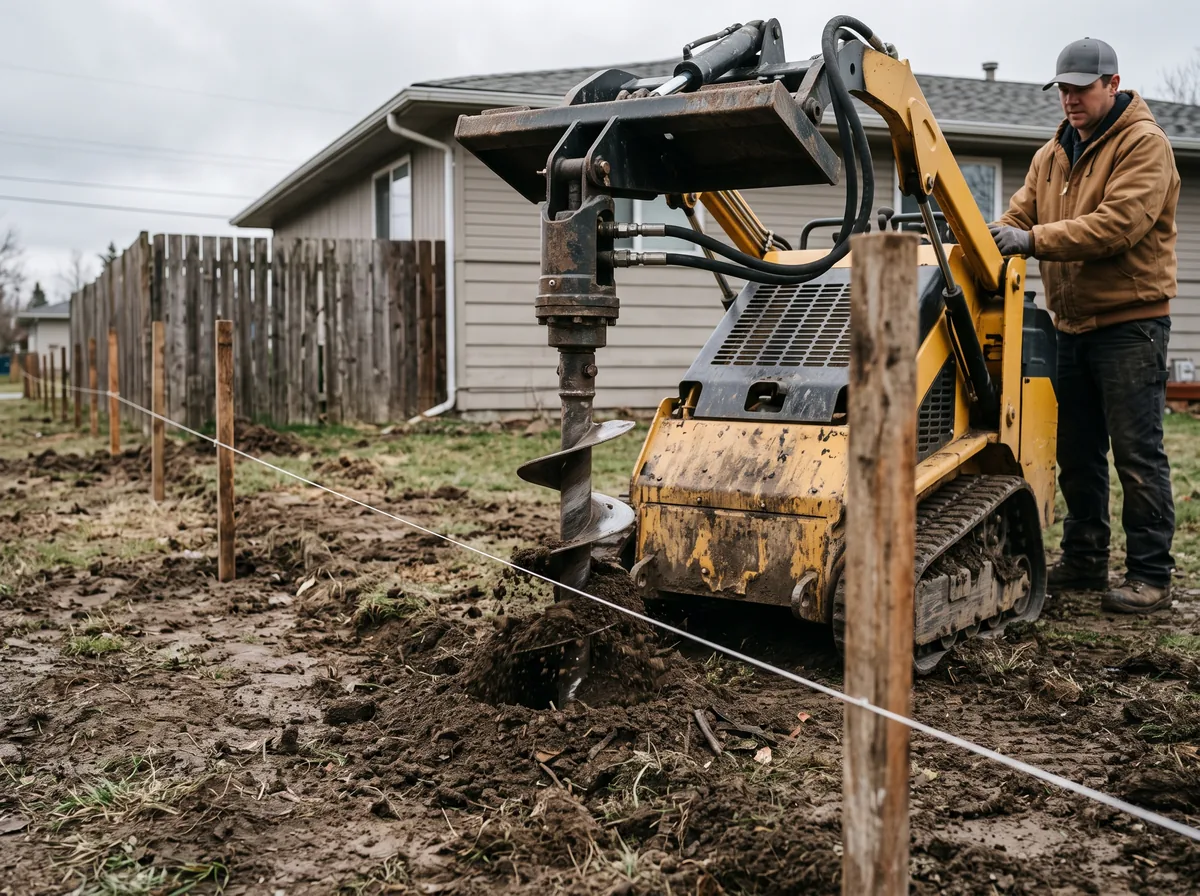
A mini bobcat for fence installation earns its place on a residential job for one simple reason: size. Most machines in this class are narrow enough to pass through a standard gate opening, which means you are not tearing out a section of existing fence or driving across a neighbor’s lawn just to get equipment into the backyard. Paired with an auger attachment, it turns a run of twenty post holes from a full day of manual digging into an afternoon.
The tradeoff is that a mini bobcat is not built for moving large volumes of soil quickly the way a bigger track loader is, and our comparison of track loaders and wheel loaders covers that size and capability tradeoff in more depth. For a fence line, the smaller machine’s tradeoff works in your favour. You want precision and manoeuvrability around a property line far more than you want raw digging capacity.
Two things need to happen before any equipment arrives, and both are easy to skip when you are excited to get started.
Good to know
This article is general guidance on using a mini bobcat for fence installation, not a substitute for a utility locate or a property survey. Underground lines, easements, and local bylaws vary by property, and operating rented equipment carries its own risk. Confirm locate status before digging and read the equipment’s operating instructions before use.
Red flag
Never dig a post hole without a completed locate for that section of the property. A mini bobcat auger goes down fast, and an unmarked gas, electrical, or communications line does not care how small the machine is. Ontario One Call’s homeowner locate page covers how to request a locate and what to expect once you have.
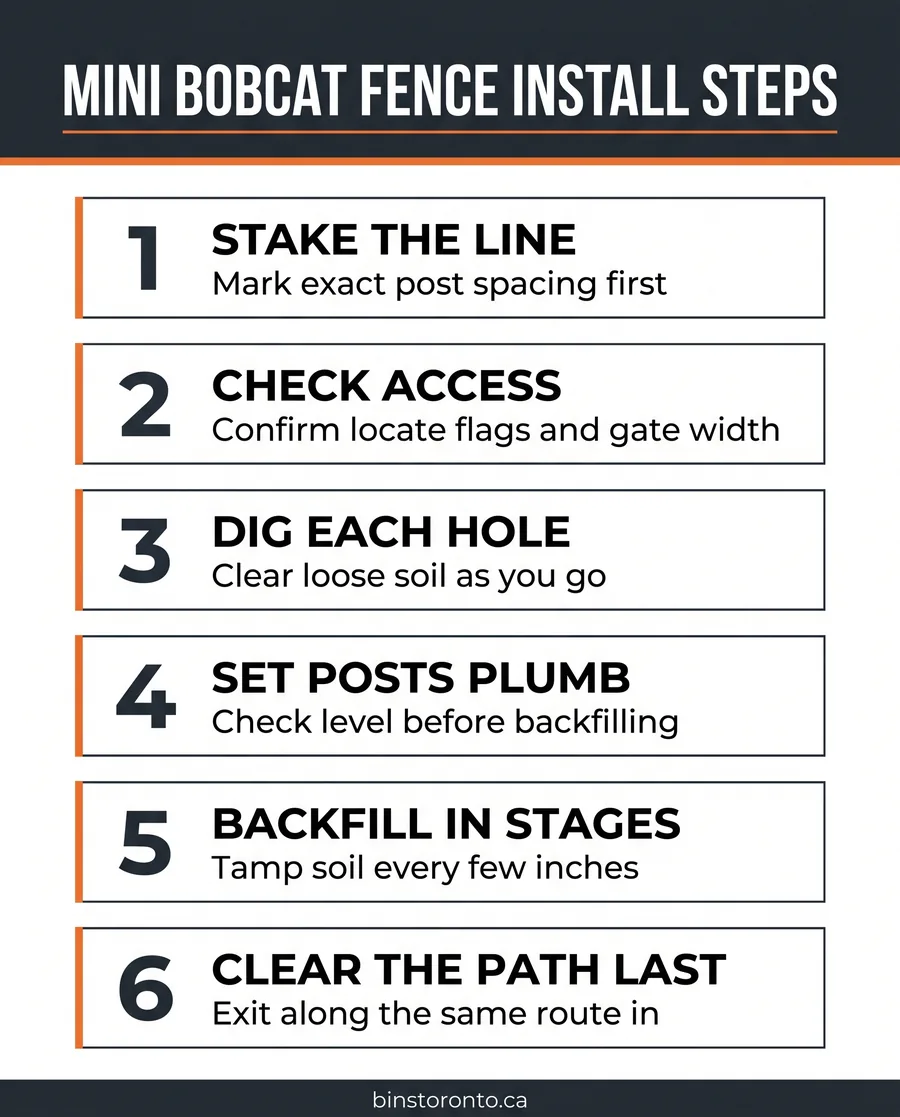
Once locates are marked and the property line is confirmed, the actual work with a mini bobcat for fence installation breaks into a handful of repeatable steps.
The most common misstep is treating the auger like it will perfectly follow a string line on its own. It will not. The operator still has to steer and reposition between holes, and rushing that step is how spacing ends up uneven across a long run. The second common mistake is skipping the slow first pass along the fence line, which is the step that catches a locate flag that shifted or a gate opening that is narrower than it looked from a distance.
A third one is backfilling too fast. Dropping all the soil back into the hole at once traps air pockets that let the post shift later, sometimes not until the following season when the ground freezes and thaws around it. If this is your first time bringing equipment onto a residential job instead of doing it by hand, our notes on renting equipment instead of buying covers a lot of the same first-timer questions.
Pro tip
Keep a bucket of gravel on hand for the base of each hole. A few inches under the post helps with drainage and gives you something firm to set the post height against before you start backfilling, rather than guessing depth against loose soil.
Download the free quick guide
A printable checklist covering locates, access measurements, and the order of steps for a mini bobcat fence installation.
Generally yes, with the right auger bit for the soil type, though dense clay slows any digging equipment down compared with sandy or loamy soil. The auger may need to be backed out and cleared more often in clay to avoid binding. If your soil has a lot of rock or root material mixed in, mention that when you book so the auger bit matches what it will actually be cutting through.
It varies by model, so measure your narrowest gate or gap along the planned access route and confirm the machine’s width against it before booking, rather than assuming compact means it fits everywhere. Most residential side gates were built for foot and wheelbarrow traffic, not equipment, so this is worth checking early rather than discovering a mismatch on delivery day.
Permit and setback requirements for fences vary by municipality and sometimes by property, and using rented equipment does not change what your local bylaw requires. Check with your municipality before you finalize post locations, particularly if the fence sits near a shared property line, since that is a separate question from whether locates have been completed for digging.
It depends on the length of the run, the soil conditions, and how many corners or obstacles are along the line, so there is no single number that applies to every yard. What tends to matter most for timing is how much prep, staking the line and confirming locates, happens before the machine arrives, since that step is what keeps the actual digging moving without interruptions.
Many homeowners do run the machine solo once they are comfortable with the controls, but having a second person to hold the string line, check post spacing, and watch for locate flags makes the job noticeably smoother and safer. Read the equipment’s operating instructions before use regardless of experience level, since controls differ between models.
Before your fence install day, work through this order:
If you are ready to bring a mini bobcat for fence installation onto your property, check current availability on our equipment rental page and we will help you plan the delivery around your access route.