
October 22, 2026
Premier Bin rental Service in Toronto and the GTA
Published:
A downed branch in the backyard is the easy part. According to the City of Toronto’s storm damage guidance, a full municipal response to a serious storm can take anywhere from three days to six months depending on how widespread the damage is, and that timeline is for city owned trees and roads, not for what happened on your own property. Post storm property cleanup on private land is entirely on the homeowner, which means the pace of it is up to you, not a crew schedule you are waiting on. Renting a bin to clear storm debris quickly is usually the fastest way to take that timeline back into your own hands.
This is a coach’s version of post storm property cleanup: the order to do things in, what to photograph before you touch anything, which debris piles belong together, and where the real hazards hide once the wind has already died down.
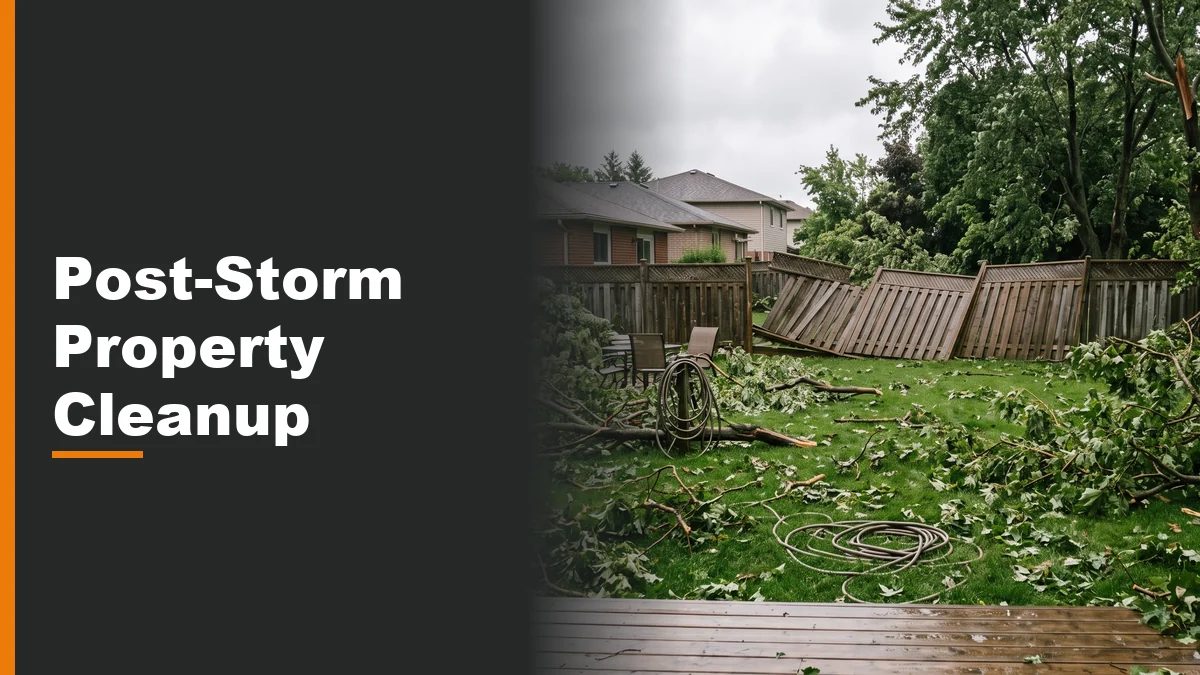
Wind and hail leave more than one kind of mess. There is the obvious stuff: branches, torn shingles, a section of fence lying flat in the yard. Then there is the slower discovery: a soaked insulation batt in the attic, a soffit panel that peeled back and let water in, a shed roof that looks fine from the driveway but sags when you climb the ladder. Post storm property cleanup covers both, and treating them the same way, one big pile hauled away at once, is where most of the avoidable cost and confusion comes from.
The goal for this weekend is not to make every repair decision. It is to get the property safe, documented, and cleared enough that contractors and adjusters can actually see what they are quoting.
Before a single branch gets dragged to the curb, walk the perimeter of the property with a phone in hand and look up, not just down.
Red flag
A line that is down, sparking, or simply touching a tree is not a cleanup task. Stay well back, keep everyone else back too, and report it to your utility provider before doing anything else on the property. The same goes for a hanging limb directly over a path you would normally walk. Route around it rather than under it until it comes down safely.
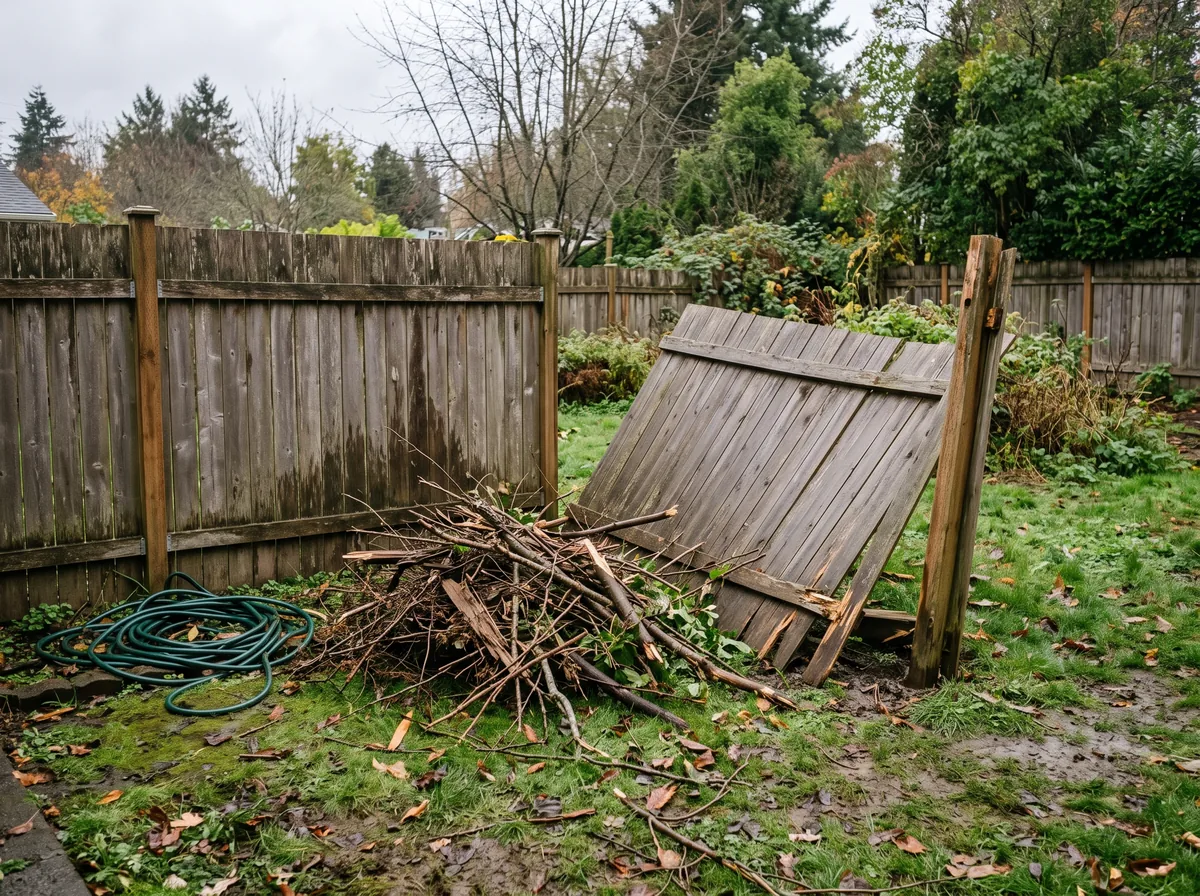
Photograph before you move anything, not after. Wide shots of each affected area, then closer shots of specific damage: the cracked fence post, the dented eavestrough, the water stain spreading across the ceiling below the roof leak. Keep a running list of what you photograph and when, since post storm property cleanup often stretches over more than one day and it is easy to forget which pile came from where.
What your policy actually covers, and whether storm damage falls under a specific clause or a general property section, depends entirely on your own policy wording. Call your insurer before you dispose of anything you are unsure about, and ask directly whether they need to see debris in place before it is cleared.
Save your money
Insurers and contractors both work faster from clear photos than from a verbal description after the fact. A few extra minutes with your phone before cleanup starts can shorten the back and forth on a claim considerably, since there is less need for a second site visit to confirm what was actually there.
Mixing everything into one pile is the single biggest thing that slows post storm property cleanup down, because clean yard waste, damaged building material, and anything with attic insulation or drywall dust in it are not handled the same way once they leave your property. Keep three separate areas as you clear the yard.
Our overview of how clean loads differ from mixed loads goes into more detail on why this sorting step matters once a bin is on site, particularly for anything that ends up mixed with wet material.
Once everything is sorted and photographed, the fastest way through post storm property cleanup is usually a single bin sized for the volume rather than several trips with a truck and trailer. A driveway-sized dumpster lets you load branches, torn siding, and damaged fencing as you clear each section of the yard instead of staging piles that then need to be moved twice.
Sizing depends on how much of the property was affected. A single downed tree and some fence damage is a different job than a property that lost a shed roof and half its fence line, and our guide to choosing a bin size walks through the difference in volume between the common sizes so you are not guessing.
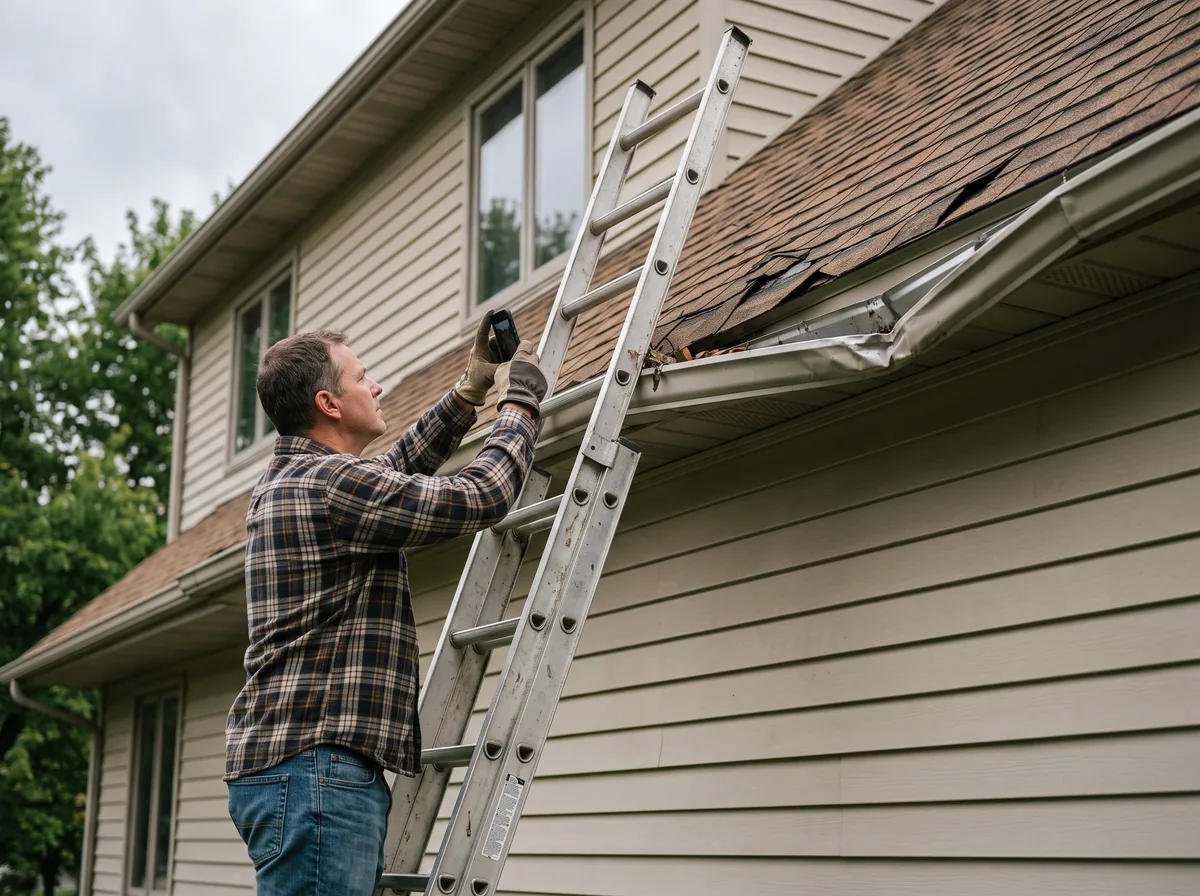
A fence panel is a cleanup job. A roof that lost shingles down to the underlayment, a shed with a cracked ridge beam, or a deck post that shifted at the footing are structural questions, not yard work, and they change how post storm property cleanup should proceed on that part of the property. Do not walk on a roof or climb into a shed with visible structural damage to assess it yourself. What looks like a manageable repair from the ground can be carrying weight it was never built for.
Get a qualified contractor to look at anything load bearing before you clear debris away from it, since removing material that is still helping support a weakened section can make the problem worse rather than better. Once a contractor has confirmed what needs to come down, that debris typically joins the damaged building material pile from Step 3 rather than the clean yard waste.
Good to know
This article describes a general order of operations for post storm property cleanup, not an assessment of your specific property. Structural damage, downed utility lines, and insurance coverage all depend on your situation. Confirm structural safety with a qualified contractor, report utility hazards to your provider, and check coverage details directly with your insurer before you make final decisions.
Download the free quick guide
A printable checklist covering the safety walk, the photos to take first, and how to sort debris before a bin arrives.
As soon as it is safe to be outside and you have finished photographing the damage. Downed lines, hanging limbs, and unstable structures should be checked first, since those determine which areas of the yard are safe to work in at all. Once the property is confirmed safe, post storm property cleanup can generally start right away. There is no benefit to leaving debris in place longer than it takes to document it, and wet material left sitting tends to get heavier and messier the longer it waits.
Yes, and it is worth doing before a bin even arrives. Clean branches and leaves are handled differently than damaged building material like shingles or fencing, and material that got wet or touched standing water is its own category again. Keeping the three separate as you clear the yard makes the whole post storm property cleanup faster, since nothing has to be resorted later once it is already loaded.
Photograph everything first, then ask your insurer directly whether they need to see debris in place before it is removed. Some claims move faster with clear photo documentation and do not require an in-person visit before cleanup, while others do. This varies by insurer and by the extent of the damage, so a quick call before you start post storm property cleanup can save you from having to undo or delay work later.
It depends heavily on how much of the property was affected. A single downed tree and light fence damage is a smaller job than a property that also lost roofing material or a shed section. Rather than guessing, walk the yard once everything is sorted and estimate roughly how full a driveway sized bin would get, then size up if structural debris is part of the load.
Generally it is better not to mix them if you can avoid it, since clean yard waste and damaged building material are not always processed the same way once they leave your property. If space or timing means you only have one bin for the whole post storm property cleanup, load branches and clean material first and building debris on top, and mention the mixed load when you book so it is handled correctly.
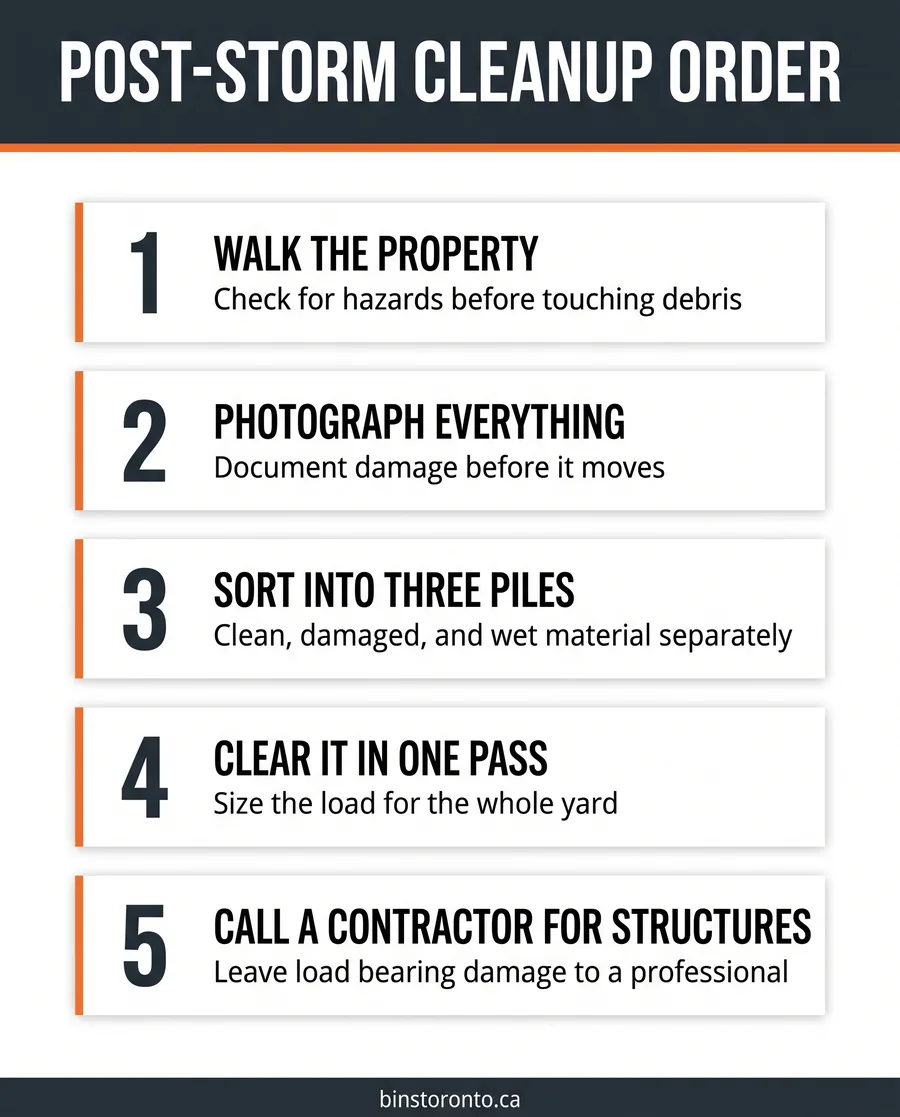
Post storm property cleanup, in order:
If your property took real damage this season, talk to our team about a same week bin rental and we will help you size it for what is actually in the yard.